From the Exposed Campaign: a powerful two-minute video, which speaks for itself. Continue reading “Grace’s story: a schoolgirl and a corrupted world”


From the Exposed Campaign: a powerful two-minute video, which speaks for itself. Continue reading “Grace’s story: a schoolgirl and a corrupted world”
Back in 1974 William Cary wrote a widely cited article about Delaware in the Yale Law Review, where he stated:
“a pygmy among the 50 states prescribes, interprets, and indeed denigrates national corporate policy as an incentive to encourage incorporation within its borders, thereby increasing its revenue.”
Today, the problem is larger, as Delaware continues what a more recent observer calls “a political tradition of self-serving venality.” Continue reading “Renting Judges for Secret Rulings in Delaware”
Following our blog yesterday looking at the national security implications of Europe’s tax haven mentality, we have been drawn to this post from 2008, looking at the West’s options in dealing with Russian aggression in Georgia at the time. It lists several interesting possibilities, but we found this one most interesting:
Cry “Havoc” and Let Slip the Dogs of Accounting. Continue reading “Ukraine: how to put pressure on Russia”
From the UK-based Centre for Health and the Public Interest:
“Those investigating the persistence of poverty in developing countries and those struggling to sustain high quality health care in the UK have more in common than we think.”
Why? Well, read on.
We recently briefly blogged an IMF report describing how economic inequality leads to slower economic growth.
Now, in the Financial Times, a fascinating comment article by the IMF Deputy Research Director Jonathan Ostry, whose subtitle is “A more redistributive tax system appears to lead to higher growth.”
It’s a big study, and it has two striking results. Continue reading “Tax justice is good for growth: IMF”
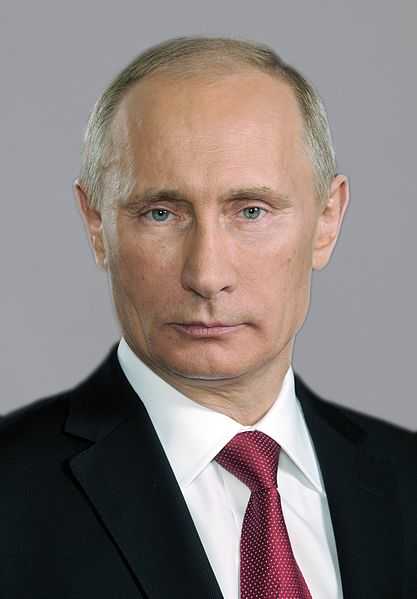
Photo: kremlin.ru, creative commons
If there’s one story you read today make it this one, from Politico Magazine. It’s triggered by the crisis in Ukraine, but it’s been a long time coming.
The point of this short story is clear: Western leaders are waking up to the fact that Russia no longer fears or even respects them. Why? Well:
“Russia thinks the West is no longer a crusading alliance. Russia thinks the West is now all about the money.” Continue reading “Why Russia no longer fears the West. It’s the offshore, stupid”

Ukrainians queue to see their ex-President’s private residence, 23 February 2014. Photo credit: Aleksandr Andreiko, Creative Commons
From Global Witness – see also Daily Mail and The Independent.
Update: see also this important blog, looking at the national security implications of all this corruption.
Anonymous UK company owned Viktor Yanukovych’s presidential palace compound
1 March 2014
The private residence of the newly-toppled president of Ukraine, Viktor Yanukovych, has come to be seen as a monument to decadence.[i] When Yanukovych fled, the security personnel around the palace also left, and hundreds of ordinary Ukrainians were, for the first time, able to see the extravagance of the place for themselves. Continue reading “Anonymous UK company owned Viktor Yanukovych’s presidential palace compound”
We have just received the following email from Concerned American, resident in Switzerland. Her/his wrath is directed at our director, John Christensen, who was interviewed on CNN yesterday and – amongst other things – discussed the latest report on Swiss banks from the US Senate Permanent Committee on Investigations. Continue reading “TJN on Switzerland: “Shallow, ignorant and short-sighted””
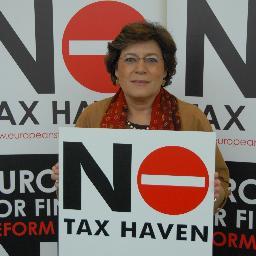
Ana Gomes
Following the latest Credit Suisse scandal in the United States, Ana Gomes, a European Member of Parliament, has issued this public letter to the chairs of the Foreign Affairs Committee (AFET) Civil Liberties, Justice and Home Affairs (LIBE); and Economic and Monetary Affairs (ECON.)
We fully support this letter, and we urge others to do so too. Her letter reads as follows; the original is here.
Continue reading “European MEP calls for hearing on Swiss banking scandals”

From Reuters, an excellent Special Report:
“Niger has become the world’s fourth-largest producer of the ore after Kazakhstan, Canada and Australia. But uranium has not enriched Niger. The former French colony remains one of the poorest countries on earth.” Continue reading “Tax justice and modern-day colonialism: Areva vs. Niger”

photojojo.com, creative commons
A useful reminder about shadow banking from Anastasia Nesvetailova, Reader in International Political Economy at City University London. It begins like this:
“It takes me about two hours to assemble a team of finance geeks and lawyers to devise a product or a transaction that would bypass any new rule or regulation coming our way,” said a senior French banker to me Continue reading “Not quite anywhere: shadow banking and the offshore system”
[vc_row][vc_column][vc_column_text]From tax advisers Taxand, who have just conducted a global survey of corporate Chief Finance Officers (CFOs):
From Reuters:
“Income inequality can lead to slower or less sustainable economic growth, while redistribution of income, when measured, does not hurt and can even help an economy, IMF staff found in a research study released on Wednesday.” Continue reading “Income inequality leads to slower economic growth – IMF study”
From Unite, Ireland (via Tax Research), a nice little graph showing effective corporate tax rates in Europe. We haven’t seen this one before. Ireland, the Netherlands and Luxembourg – the Eurozone’s three most notorious tax havens – are the clear abusers. Continue reading “Read our lips: Ireland is a tax haven. Part xxvi”
We’ve had a bit of time to look through the landmark Credit Suisse report from the U.S. Permanent Subcommittee on Investigations, outlining industrial-scale Swiss corruption. It contains some pretty instructive things about some of the ways banks use to get around international initiatives, and about those initiatives themselves. Here are some highlights. Continue reading “The Credit Suisse scandal: echoes of Too Big To Jail”
 From Alexander Lebedev in the New York Times:
“According to the Tax Justice Network, an independent group promoting efforts to curb tax avoidance, crooked business people, working with corrupt officials, have embezzled $30 trillion over the last 15 years — or half of the world’s annual gross domestic product.” Continue reading “Tax havens and corruption: Lebedev and TJN in the NYT”
 From The Guardian:
“Senators Carl Levin and John McCain had harsh words for the Justice Department and the Swiss government, too, as they released a 178-page permanent subcommittee on investigation (PSI) report into offshore tax avoidance. Continue reading “Credit Suisse: industrial scale corruption in Switzerland”
The International Advisor magazine has just reported:
“Guernsey chief minister Peter Harwood resigned today, in the wake of publication of a critical article in the current issue of the British satirical and investigative publication, Private Eye.”
This refers to an excellent report entitled “Milking in Guernsey” by The Eye into the scandal-plagued Guernsey-based Channel Islands Stock Exchange (CISX,) Continue reading “Guernsey milking and the offshore stock exchange”
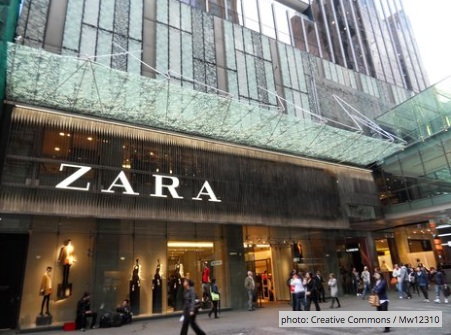 Bloomberg tax star Jesse Drucker has another fine article out about the Spanish retailer Inditex, the parent of high street retail giant Zara. We would urge you to read it. Among many other things, it contains:
“In the past five years, Inditex has shifted almost $2 billion in profits to a tiny unit operating in the Netherlands and Switzerland, records show. Although that subsidiary employs only about 0.1 percent of Inditex’s worldwide workforce, it reported almost 20 percent of the parent company’s global profits last year.” Continue reading “Fashion retailer’s tax dodges boost European inequality”
 A major new report from the indefatigable Citizens for Tax Justice in the U.S.
The Executive Summary begins:
The Sorry State of Corporate Taxes
What Fortune 500 Firms Pay (or Don’t Pay) in the USA And What they Pay Abroad — 2008 to 2012 Continue reading “Report: the Sorry State of U.S. Corporate Taxes, 2008-2012”
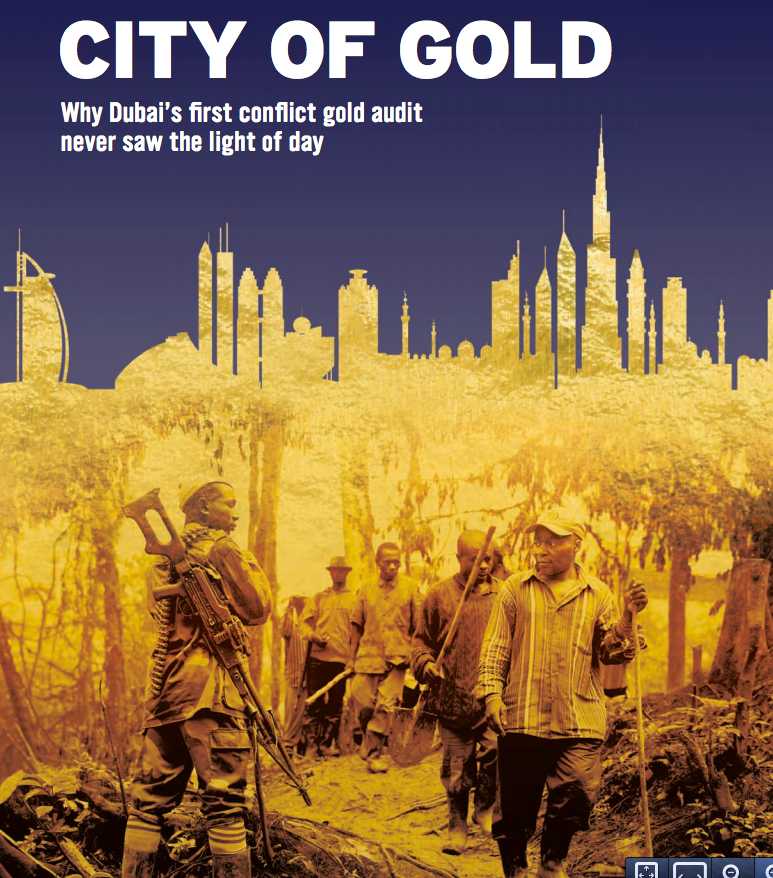 We have remarked before on Dubai’s role as a particularly egregious and recalcitrant secrecy jurisdiction, harbouring some of the world’s worst scoundrels and their money: the likes of Indian master criminal Dawood Ibrahim, the arms dealer Viktor Bout, and many others. Dubai ranks 16th in our Financial Secrecy Index overall, and a pretty mucky 19th place (out of 82) when measured purely on its secrecy score. Read the whole fascinating story about how Dubai became a secrecy jurisdiction here.
Now, from Global Witness, a tale to confirm our concerns:
Revealed: Why Dubai’s first conflict gold audit never saw the light of day
25th February 2014
According to a former partner at Ernst & Young, the global accountancy firm turned a blind eye when a report of major audit failures at Dubai’s biggest gold refinery went unpublished. A Global Witness report released today, City of Gold,considers the implications.
Continue reading “Ernst & Young: why Dubai’s first conflict gold audit was silenced”
 Cross-posted from the Treasure Islands blog:
From the Financial Times, a short video entitled Bright Future for British Engineering? It looks at some promising stuff going on in the Advanced Manufacturing Research Park, a collaboration between the University of Sheffield and Boeing Corp.
The video is notable not just for the fact that the t-word is absent. Continue reading “Local innovators lament the City of London’s failure”