Tax avoidance: a note to editors

Tax practitioner Noel Hodson has just issued the following notes to editors about the term ‘tax avoidance’:

Most media, even the BBC, persist in quoting notorious professional tax-planners, embedded in the establishment, that “tax avoidance is completely legal”. My 50+ years of practical, hands-on case work tells me that elaborate tax schemes, particularly via the 74 tax-havens are illegal in all OECD and most other tax regions – including the UK. Continue reading “Tax avoidance: a note to editors”

How developing countries can take control over their tax destinies

headshot_KrishenMehta

Krishen Mehta, a Senior Adviser to TJN, has written a short document with ten pointers offering ways that developing countries can take control over their tax destinies. We reproduce the introduction of his article below: please click on the full article for the ten points. We hope to produce more of these in due course, in collaboration with other experts.

How Developing Countries can take Control of their own Tax Destinies

By Krishen Mehta

July, 2014  Continue reading “How developing countries can take control over their tax destinies”

How will Juncker, tax haven candidate, handle his conflicts of interest?

Next week we expect Jean-Claude Juncker, the former long-standing prime minister of Luxembourg, to be nominated to the powerful role of President of the European Commission. The man who for many years defended one of Europe’s nastiest and biggest secrecy jurisdictions (or tax havens) now faces an important question.

Will he continue discreetly to find ways to represent the interests of Luxembourg against the ordinary citizens of Europe? Time will tell. For now, the Financial Times investigates a recent European investigation into the tax arrangements of various large multinationals Continue reading “How will Juncker, tax haven candidate, handle his conflicts of interest?”

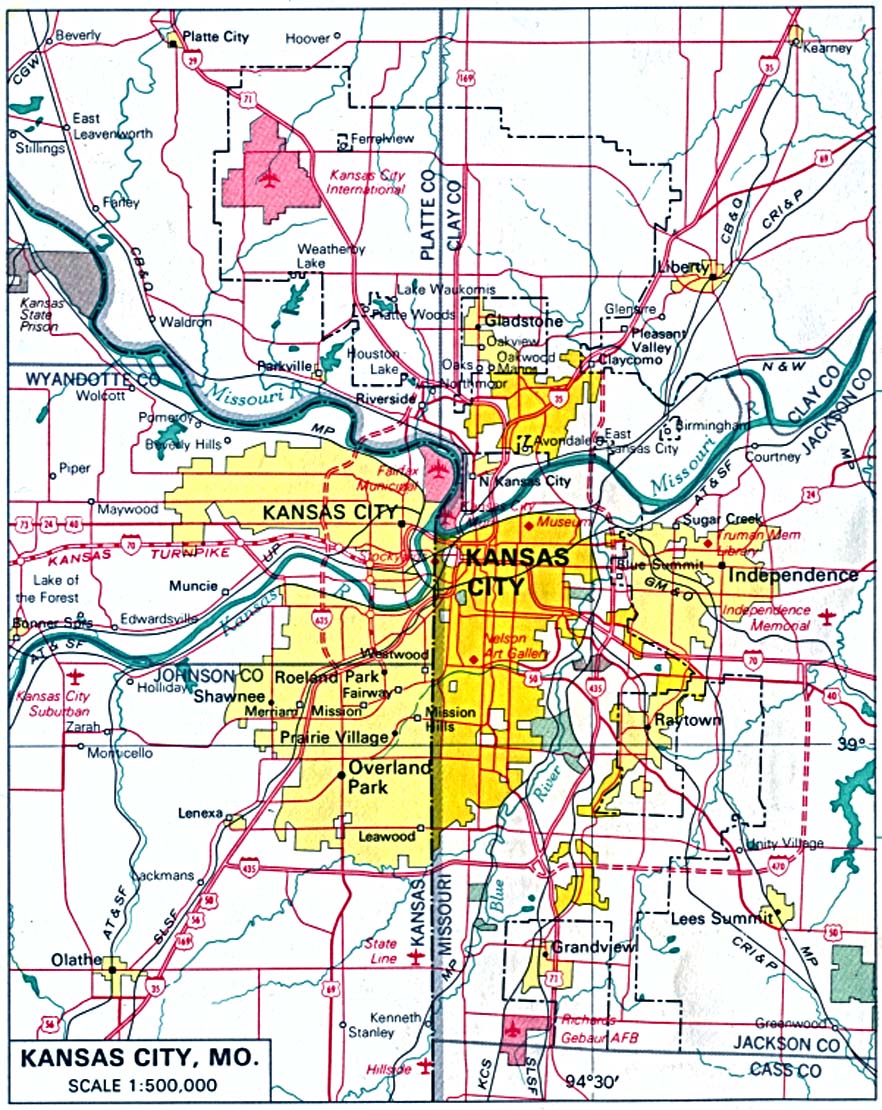
Kansas/Missouri: local ceasefire in U.S. tax border war?

The state boundary runs through Kansas City

The state boundary runs through Kansas City

Last year the St. Louis Post-Despatch published an editorial entitled Missouri Senate declares class war against citizens, looking at tax subsidies being showered on businesses in an effort to lure them away from neighbouring Kansas – which, in turn, has been showering subsidies on businesses to cross the line to its side.

There are probably fewer places in the world where this senseless race to the bottom is most evident. The process is widely known as tax competition but we prefer to borrow from the Brazilian term Guerra Fiscal (tax war, or tax wars) – partly because it is the more economically literate term, and partly because it conveys the harm more accurately. Continue reading “Kansas/Missouri: local ceasefire in U.S. tax border war?”

Quote of the day: opium and competitiveness

From a book called The Opium Wars, one of Britain’s less honourable (to put it mildly) historical escapades, a statement that was prompted by moves in Britain towards stopping the opium trade:

“Her Majesty’s government should do nothing to place in peril our opium revenues. As for preventing the manufacturing of opium, and the sale of it in China, that is far beyond your power.”
Lord Ellenborough, 1843

Do those arguments sound familiar?

Doubtless they were wielded in the name of ‘competitiveness,’ or its equivalent at the time. Around the time, some ten percent of Britain’s revenues came from the opium trade – and, needless to say, the British government capitulated to the opium traffickers.

Quote of the day: Christine Lagarde

LagardeAs reported by Tax-News, IMF Managing Director Christine Lagarde said:

“There would be more revenue for all if countries resisted the temptation to compete with each other on taxes to attract business. By definition, a race to the bottom leaves everybody at the bottom.”

Interestingly enough, she was speaking in the Caribbean, which contains more than its fair share of tax havens. See more on the race to the bottom on our Tax Wars page, here.


Barclays sheds some light on its financial affairs, country by country

Richard Murphy, who pioneered the concept of Country by Country reporting, has produced an important analysis of the data revealed in one of the first such published reports, from UK-based Barclays bank.

Among many other things, he says:

“This analysis suggests that Barclays is massively under-declaring profit in the UK at cost to all of us. I estimate that the loss to the UK could easily exceed £150 million.” Continue reading “Barclays sheds some light on its financial affairs, country by country”

Press Release: European Commission hires transparency opponent to assess corporate transparency

NGOs Barnier letterTJN is a signatory to the following letter, and this press release:

Press Release: CSOs protest as European Commission hires opponent of corporate transparency to assess corporate transparency 

After strongly opposing any publication of data from corporate country by country reporting, PricewaterhouseCoopers (PwC) has been hired by the European Commission to do an impact assessment of public country by country reporting for banks in the EU. Continue reading “Press Release: European Commission hires transparency opponent to assess corporate transparency”

Over 95% of Britons want a more progressive tax system

Equality Trust logo

From The Equality Trust, in a report on the United Kingdom:

“Public support for a more progressive tax system is high. Over eight in ten (82%) believe that households in the highest 10% income group should pay a greater proportion of their income in tax than those in the bottom 10%. An even greater majority (96%) would like the tax system to be more progressive than it currently is.”

Ninety six percent: a number to make your eyes water. Read the report, or read this summary in The Guardian.

See also this recent report from the Equality Trust looking at top tax rates in the UK. They find, among other things, that

“There is little or no relationship between tax rates and economic growth.  There is only a proven relationship in the case of very high taxes of above 80%”

As we have noted before, many times. And it’s hardly surprising that this is so, given that tax is not a cost to an economy but a transfer within it, from one productive sector to another.

Quote of the day: big accountancy firms have a human rights problem

From Prem Sikka our quote of the day comes from an article entitled Big accountancy firms have a human rights problem:

“In many other organisations such subversion of the human rights would be considered to be a badge of shame. At major accountancy firms it is increasingly considered to be a sign of business acumen.”

This follows news that the Big Four firms of global accountants clubbed together officially to publish an advertisement denouncing the Hong Kong pro-democracy movement in the name of competitiveness. We are delighted to see now that the South China Morning Post is reporting that Big Four employees have now taken out an advertisement of their own disowning the advertisement. Continue reading “Quote of the day: big accountancy firms have a human rights problem”

Manhattan real estate: a little tax haven in America

OLYMPUS DIGITAL CAMERA

Image: Javier Gil

From New York Magazine, a long article about the high-end New York property market, echoing recent stories (such as this one) about One Hyde Park and the British tax haven.

“Those with less reflexively hostile reactions to foreign buying competition might still wonder: Who are these people? An entire industry of brokers, lawyers, and tight-lipped advisers exists largely to keep anyone from discovering the answer. This is because, while New York real estate has significant drawbacks as an asset—it’s illiquid and costly to manage—it has a major selling point in its relative opacity. With a little creative corporate structuring, the ownership of a New York property can be made as untraceable as a numbered bank account. And that makes the city an island haven for those who want to stash cash in an increasingly monitored global financial system. Continue reading “Manhattan real estate: a little tax haven in America”

Quote of the day on the OECD’s tax project: “let’s hope nothing happens”

From the Financial Times, in a story about a conference on the OECD’s much-discussed BEPS project to reform international tax rules for transnational corporations:

The gameplan is to be positive but hope as little as possible happens,” is how Paul Oosterhuis, a tax partner of Skadden Arps, the US law firm, described the attitude of US corporations to government proposals to amend its global arrangements.

Big Four firms officially sell out Hong Kong’s democracy movement

[vc_row][vc_column][vc_column_text]Updated with commentary from the Financial Times and Bloomberg: see below

CNBC is reporting:

“As a pro-democracy movement gains steam in Hong Kong, some worry the campaign could hurt the city’s competitiveness and rattle its financial market.”

One could unpack that short sentence and probably find five or ten nonsenses and fallacies coiled up inside it. So democracy is the enemy of ‘competitiveness,’ is it? In that case, what is the meaning or the point of ‘competitiveness,’ if it stands against the wishes of the people it is supposed to benefit? Pray do tell, CNBC. Continue reading “Big Four firms officially sell out Hong Kong’s democracy movement”

The Swiss commodity black hole: a bizarre new government proposal

Swiss commodities

From the Berne Declaration backgrounder.
Click to enlarge

From the Berne Declaration and Swissaid:

“The Federal Council today announced its wish to close the Swiss gaps in transparency for the global commodity industry. But the entire commodities trading business may well be excluded from any future regulation.”

Continue reading “The Swiss commodity black hole: a bizarre new government proposal”

IMF: tax havens cause poverty, particularly in developing countries

IMF logoThe IMF has a major new Policy Paper out entitled Spillovers in International Taxation, looking at the effects that one country’s tax rules and practices can have on others.

Of course this is a Staff Report and the IMF would never be so rude to some of its most powerful member states as to explicitly say what is in our headline – but that’s what we read between the lines. “Spillovers” in international tax are all about tax haven activity, particularly when those spillovers are deliberately crafted.

Now that we’ve read it, we conclude that this is a really important document. It tears apart much of the prevailing OECD tax consensus that has dominated international tax for the last century.

We are delighted to see that it convincingly takes the side of developing countries: not only taking sides in big current political fights (such as India vs. Vodafone) Continue reading “IMF: tax havens cause poverty, particularly in developing countries”

The UK’s ‘open for business’ tax regime: investment falls

We were going to do a job on this report but Tax Research got there first, so we’ll cut and paste:

UK corporation tax policy fails to attract new business as Foreign Direct Investment falls

From the time that the current government came into power corporation tax reform has been one of their key objectives. The result has been a cut in the tax rate from 28  % to 21% now with 20% to follow, and a cut in the tax base, meaning that whole swathes of income have fallen out of the scope of the tax. Continue reading “The UK’s ‘open for business’ tax regime: investment falls”

Why big time tax dodgers love Jean-Claude Juncker

On the plus side, he is quite the joker

On the plus side, he is quite the joker

From Private Eye, a commentary on Jean-Claude Juncker, and our quote of the day:

“Supporters of would-be European Commission president Jean-Claude Juncker should perhaps pause to examine the great man’s record of wreaking fiscal havoc across the continent.”
. . .

[under his tutelage] the Grand Duchy became the member of the economic club that pilfered from the club’s funds.

Our quote of the day in bold. Now read on.

The Impacts of Illicit Financial Flows on Peace and Security in Africa

From Alex Cobham of the Center for Global Development, a paper for the Tana High-Level Forum on Security in Africa 2014. It’s called, as our title suggests, The Impacts of Illicit Financial Flows on Peace and Security in Africa.

Published in April, it’s an important contribution to the literature on this large topic, and it teases out many of the subtleties in the arguments and analyses that very often get lumped together into one large topic. Continue reading “The Impacts of Illicit Financial Flows on Peace and Security in Africa”

New report: developing countries want automatic information exchange

From the International Tax Review:

“The Tax Justice Network (TJN) has accused the OECD of not consulting developing countries about the design of the framework for Automatic Information Exchange (AIE), which the G20 has endorsed as the global model for information exchange.”

Our new report was prompted partly by comments from OECD tax boss Pascal Saint-Amans that

“Most (developing countries) are not yet ready and most of them don’t want it.”

So we conducted a survey to find out what developing countries genuinely thought. And the results clearly contradicted Saint-Amans’ pessimistic and strange view.

Read our in-depth report here.


The June 2014 Taxcast: Piketty, the World Cup, and capital flight

[vc_row][vc_column][vc_column_text]WorldCupIn the June 2014 Taxcast: the guillotine v progressive tax?

The Taxcast looks at Thomas Piketty’s book Capital in the 21st Century. Also: welcome to the temporary tax haven of World Cup Brazil; the EU Commission begins investigations into illegal state aid for tax havens; and are developing countries really not interested in tracking illicit outflows from their countries via transparency? Plus more scandal.

Produced by @Naomi_Fowler for the Tax Justice Network.

“it’s impossible for nation states and democracy to survive in an era of totally globalised markets where capital can quite simply evade and avoid taxes” John Christensen

Featuring: Journalist and Treasure Islands author Nick Shaxson, Economist and author of Capital in the 21st Century Thomas Piketty, Director of the Tax Justice Network John Christensen, head of the Bank of England Mark Carney, head of the IMF Christine Lagarde, MEP Martin Schulz.

Download from this link here: http://traffic.libsyn.com/taxcast/Taxcast_June_2014.mp3[/vc_column_text][vc_column_text]Remember the Tax Justice Network app is free and available on Android and Apple: just search for Tax Justice Network…

www.tackletaxhavens.com/taxcast

www.taxjustice.net/taxcast

Happy listening![/vc_column_text][/vc_column][/vc_row]

The alternative offshore awards: an idea whose time has come?

FSMFrom the Financial Secrecy Media Monitor:

“Thanks to a promoted tweet from Jersey Finance comes news of the International Fund & Product Awards 2014, in which Jersey won the Best International Financial Centre award.  Other winners were Standard Bank Offshore Group for Best International Banking Service and BNP Paribas – currently awaiting a billion dollar settlement for sanctions violations in the US – who were “highly commended” as Best International Fund Group.

Since the offshore industry seems to regularly give itself awards, perhaps an alternative annual prize ceremony could be organized, inspired by The Intruders and their award for “innovation in interest rate manipulation” given to Barclays in 2012. Continue reading “The alternative offshore awards: an idea whose time has come?”

Campaign: Ireland’s tax model must stop hurting the global south

stop tax dodging

In 2012 ActionAid published a report estimating that a huge new tax loophole deliberately created by the UK government – which it seems is bringing in precious little in terms of jobs or tax revenues – is also likely to cost developing countries some £4 billion (US$6 billion) a year.

Ireland’s dodgy transfer pricing shenanigans – whose history we have written about at length – are likely to be costing similarly vast sums to countries around the world, rich and poor.

Now, from the Debt and Development Coalition Ireland:

“Debt and Development Coalition Ireland (DDCI) has called on the Minister for Finance Michael Noonan to act to ensure that Ireland’s tax model stops hurting countries of the Global South. Continue reading “Campaign: Ireland’s tax model must stop hurting the global south”