Economist: why it’s time to stop making debt tax-deductible

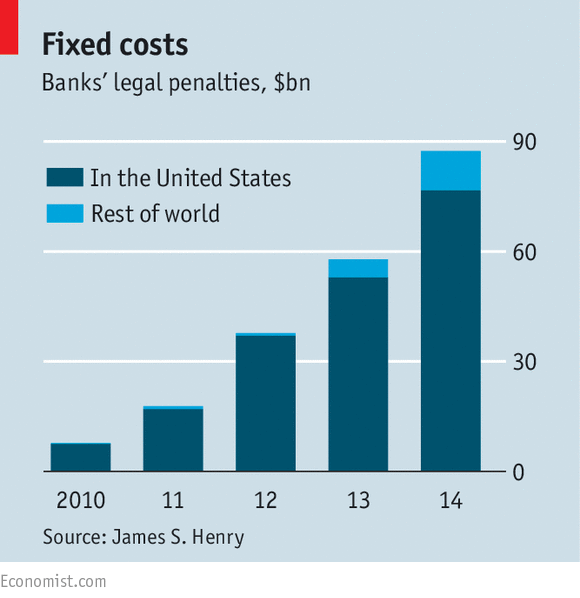
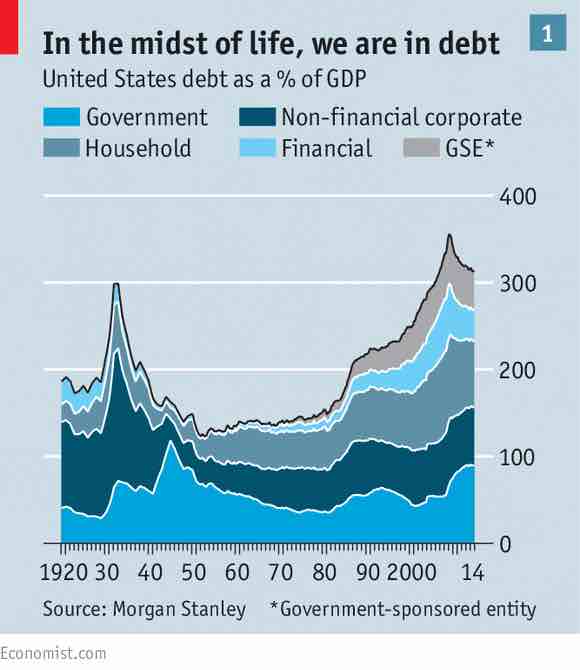
Economist debtWe’ve said this before, and we may have felt radical saying it at the time – but now it’s The Economist saying it. It has an article entitled and subtitled A senseless subsidy: Most Western economies sweeten the cost of borrowing. That is a bad idea.

Quite so. And the potential rewards it outlines from doing so are incredible.

There are the tax revenues, for one thing: it estimates that the subsidy cost the equivalent of 2-5% of GDP in tax revenues in rich countries by the time the global financial crisis struck. But here is another massive reward for countries suffering from financial ‘capture’:

“Around the world banks would shrink.”

Continue reading “Economist: why it’s time to stop making debt tax-deductible”

Tax wars: seminar at European parliament

A seminar at the European parliament in Brussels, featuring TJN’s Markus Meinzer: Continue reading “Tax wars: seminar at European parliament”

Farewell, Margaret Hodge

Margaret Hodge

Margaret Hodge

Margaret Hodge, the fiery head of the UK’s Public Accounts Committee, has been hauling the bosses of large multinational corporations over the coals for their egregious abuses of the UK tax system. Now, post-election, she is stepping down.

Many tax professionals in the UK dislike, hate, or even loathe her. That is essentially because she has fought against their interests, in the public interest.

We won’t do a detailed dissection of her time in the hot seat. If you want that, you might read this, from UK tax barrister Jolyon Maugham. As he says:

“The tax profession, by and large, will be delighted to see the back of her. . . . Nevertheless, I struggle to see any other serious claimant to the title of most influential Opposition MP of the last Parliamentary term.”


Bill Gates: corporate tax rates at 35% won’t stop the innovators

Photo: World Economic Forum, Creative Commons

Photo: World Economic Forum, Creative Commons

Via the Fools’ Gold blog:

A Bloomberg report on a Bill Gates interview:

Gates scoffed at comparisons linking taxes and regulation to slower growth. “The idea that there’s some direct connection, that all these innovators are on strike because tax rates are at 35 percent on corporations, that’s just such nonsense.” ‘

also:

“The highest economic growth decade was the 1960s. Income tax rates were 90 percent.”

This is part of a much bigger picture: that low (or high) corporate taxes do nothing to make an economy as a whole more (or less) ‘competitive.’ Read more about all this here.

Continue reading “Bill Gates: corporate tax rates at 35% won’t stop the innovators”

Financial Secrecy Index: new academic paper

Cross-posted with the Uncounted blog: a forthcoming paper in Economic Geography.

EG FSI grab

The Financial Secrecy Index is the Tax Justice Network’s flagship index of secrecy jurisdictions, or ‘tax havens’. The idea emerged from discussions at the World Social Forum in Nairobi, in January 2007.

In part, it came from frustration with a popular view of corruption as a ‘poor country’ problem – when all the analysis of experts in the Tax Justice Network showed high-income countries as central to financial crime. Continue reading “Financial Secrecy Index: new academic paper”

The Price We Pay – London premiere on 19th June 2015

y

Harold Crooks’ (The Corporation, Surviving Progress) searing documentary indictment of offshore finance gets it UK premiere at the Open City Documentary Festival in London on 19th June, and will also be screened the following week at TJN’s discussion workshop at City University. Continue reading “The Price We Pay – London premiere on 19th June 2015”

Should tax targets for post-2015 be rejected?

Alex Cobham, TJN's esteemed Director of Research

Alex Cobham, TJN’s esteemed Director of Research

From Alex Cobham, TJN Research Director, writing at Uncounted:

“In a strident blog at the International Centre for Tax and Development, Mick Moore, Nora Lustig, Richard Bird, Nancy Birdsall, Odd-Helge Fjeldstad, Richard Manning and Wilson Prichard have called for the rejection of post-2015 tax targets. (Full disclosure – I work with the ICTD, including on the Government Revenue Dataset.)

Seven leading thinkers on development and tax can’t be wrong – can they?” Continue reading “Should tax targets for post-2015 be rejected?”

Auditor rotation: the new merry-go-round

Prem Sikka

Prem Sikka

From Prof. Prem Sikka, via email:

“Auditing itself has become one of the biggest frauds of modern times. When was the last time company auditors drew attention to fiddles, tax dodging, money laundering or their own complicity in financial misdemeanours? The penalties for delivering duff audits, as demonstrated by the banking crash, are virtually non-existent. Instead of any fundamental reforms there are plenty of gestures about tweaking audit reports and now changing auditors, in effect a merry-go-round among the big accounting firms.”

Continue reading “Auditor rotation: the new merry-go-round”

A short FAQ on the European Parliament’s probe into tax rulings

TaxeWe have just mentioned a demonstration today in Luxembourg, in the context of a visit there by the European Parliament committee tasked with following up on the LuxLeaks affair. (It’s known as “The Committee on Tax Rulings and Other Measures Similar in Effect” or TAXE for short.) Christian Hallum of Eurodad has now kindly provided, via email, a report on what this body is and how it works.  Continue reading “A short FAQ on the European Parliament’s probe into tax rulings”

Tax Justice demonstration in Luxembourg as EU tax body visits


Edouard Perrin

Edouard Perrin, who faces charges for exposing Luxembourg abuses  

Update 2: with a report on the demonstration in Luxemburger Wort, which in contrast to our earlier experiences of Luxembourg media, was quite balanced. 

Update1 : with a photo (below) of today’s protest in Luxembourg. Some 50-60 people are reckoned to have attended, a good turnout in tiny, financially captured Luxembourg. 

The Dodgy Duchy of Luxembourg, like many small secrecy jurisdictions, can be a nasty place to protest against offshore finance. The sector has its tentacles in the courts, in government: everywhere. The media there is, in our experience, all but captured too, so Luxembourg’s citizenry has a poor record in terms of questioning or challenging the corrupt status quo. To oppose offshore finance can be to risk social censure or — in the case of Antoine Deltour, Edouard Perrin, Dénis Robert, and a number of other whistleblowers — a vicious, personalised attack from the offshore establishment, often led by the Big Four accounting firms such as PWC, which effectively write relevant parts of the Luxembourg legislation. It is a haven for hire. Continue reading “Tax Justice demonstration in Luxembourg as EU tax body visits”

Tax Justice Focus – the Gender edition

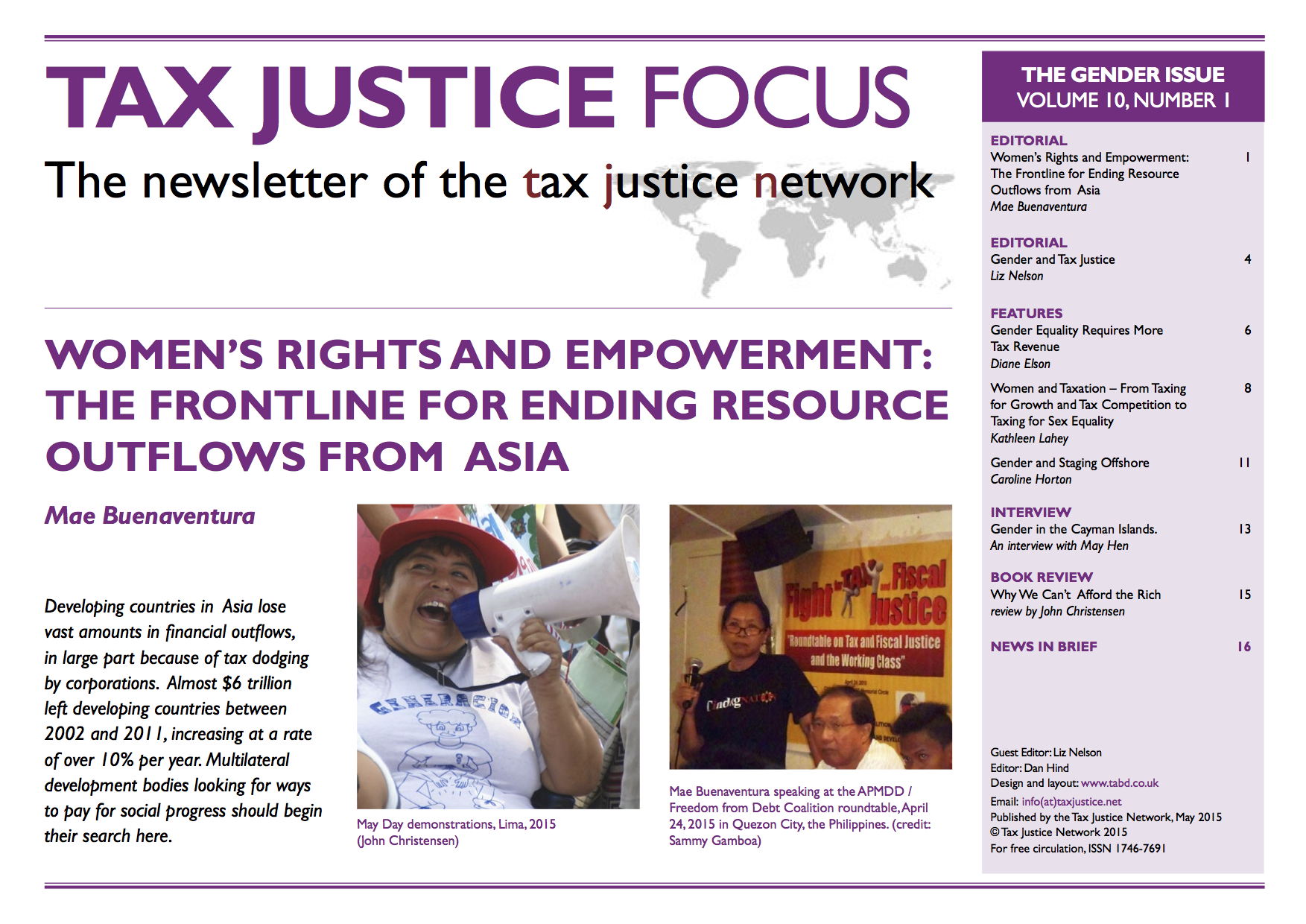
TJF women front pageWe are delighted to announce the latest edition of our quarterly newsletter,Tax Justice Focus.

This is The Gender Edition, and it is guest edited by Liz Nelson of TJN. It complements a new “Gender” page we’ve just opened up, where these materials will be permanently stored.

Continue reading “Tax Justice Focus – the Gender edition”

Is France’s economy really less ‘competitive’ than Britain’s?

[vc_row][vc_column][vc_column_text]Cross-posted from Fools’ Gold:

Our tweet of the day, from a former external member of the Bank of England’s Monetary Policy Committee:[/vc_column_text][vc_raw_js]JTNDYmxvY2txdW90ZSUyMGNsYXNzJTNEJTIydHdpdHRlci10d2VldCUyMiUyMGxhbmclM0QlMjJlbiUyMiUzRSUzQ3AlMjBsYW5nJTNEJTIyZW4lMjIlMjBkaXIlM0QlMjJsdHIlMjIlM0VUbyUyMHRob3NlJTIwb3V0JTIwdGhlcmUlMjB3aG8lMjBhbHdheXMlMjB0ZWxsJTIwbWUlMjB0aGF0JTIwRnJhbmNlJTIwdW5kZXIlMjBIb2xsYW5kZSUyMGlzJTIwc3VjaCUyMGElMjBkaXNhc3RlciUyMGp1c3QlMjBub3RlJTIwaXQlMjYlMjMzOSUzQnMlMjBjdXJyZW50bHklMjBncm93aW5nJTIwdHdpY2UlMjBhcyUyMGZhc3QlMjBhcyUyMHRoZSUyMFVLJTNDJTJGcCUzRSUyNm1kYXNoJTNCJTIwRGFubnklMjBCbGFuY2hmbG93ZXIlMjAlMjglNDBEX0JsYW5jaGZsb3dlciUyOSUyMCUzQ2ElMjBocmVmJTNEJTIyaHR0cHMlM0ElMkYlMkZ0d2l0dGVyLmNvbSUyRkRfQmxhbmNoZmxvd2VyJTJGc3RhdHVzJTJGNTk4NTgzMzk4ODc0MDkxNTIyJTIyJTNFTWF5JTIwMTMlMkMlMjAyMDE1JTNDJTJGYSUzRSUzQyUyRmJsb2NrcXVvdGUlM0UlMjAlM0NzY3JpcHQlMjBhc3luYyUyMHNyYyUzRCUyMiUyRiUyRnBsYXRmb3JtLnR3aXR0ZXIuY29tJTJGd2lkZ2V0cy5qcyUyMiUyMGNoYXJzZXQlM0QlMjJ1dGYtOCUyMiUzRSUzQyUyRnNjcmlwdCUzRQ==[/vc_raw_js][vc_column_text]This post is just a reminder, really, about all the nonsense that is spoken in the name of ‘competitiveness.’

Of course, this is just quarterly data, and the UK was recently growing faster than France. We aren’t going to get into details in this short blog. Continue reading “Is France’s economy really less ‘competitive’ than Britain’s?”

Report: Tax havens cost Egypt’s treasury billions

Egypt flagFrom Madamsr.com:

“Egypt loses as much as LE5 billion [TJN: that’s over $650 million; there’s also a reference to $2.2 billion in annual trade mispricing] a year in tax revenue due to companies using tax havens to shield profits from taxes, according to a new report from the Egyptian Initiative for Personal Rights (EIPR).

The practice also distorts figures for Foreign Direct Investment and allows companies to make investments in Egypt without disclosing ownership details, says EIPR researcher Osama Diab.”

This is just the latest of many reports that has been produced with the support of the Illicit Financial Journalism Programme, which we’re proud to be part of.


Will UK’s new government help poor countries fight tax haven secrecy?

The past record is horrible. But . . .  read on

The past record is horrible. But . . . read on

The United Kingdom is, in many respects, the most important single player in the world of offshore tax havens (or secrecy jurisdictions.) It has many offshore characteristics itself, and it runs a network of partly-British havens, whose laws it can strike down when it really wants to. So it is significant that Britain has had an election, which saw a Liberal Democrat/Conservative coalition replaced by a purely Conservative Party government. For those who aren’t familiar with British politics, the Conservatives are the mainstream right-wing party.

Continue reading “Will UK’s new government help poor countries fight tax haven secrecy?”

How to threaten politicians, the City of London way

City of LondonThis article is all about the language of financial lobbying.

The consensus that an “oversized financial centre is indispensible” is strong and at times brutally in-your-face in many countries with oversized financial centres. But this consensus can also be sophisticated and subtle, when needs be. Here’s an example of one of the more subtle bits of lobbying by the City of London, helpfully carried by the Financial Times.  The headline reads: Continue reading “How to threaten politicians, the City of London way”

Do real investors chase corporate tax cuts?

Guess which one got the corporate tax cut

Guess which one got the corporate tax cut?

Cross-posted with Fools’ Gold.

From the Financial Times, a report on a survey by the Tolley Tax Journal of businesses’ responses to the UK’s policy of savage cuts to the corporate income tax.  It’s about the UK, but it has wide international relevance.

“More than six out of 10 respondents thought the cut in the corporate tax rate, by 8 percentage points to 20 per cent, had boosted their own companies’ investment and growth, although for most it only had a marginal impact.”

Continue reading “Do real investors chase corporate tax cuts?”

The Economist has noticed the Finance Curse

The Resource Curse, in pictures

The Resource Curse, or perhaps the Finance Curse, in pictures

Regular readers will know that we have a permanent webpage entitled The Finance Curse explaining how countries with oversized financial sectors suffer a range of harms that are rather similar to a so-called Resource Curse that afflict resource-rich countries, and for a wide range of similar reasons.

The Economist has recently written a long article entitled What’s Wrong with Finance, in which they basically endorse our thesis (though without mentioning us. Hat tip: @NikoLusiani) As they note:

Continue reading “The Economist has noticed the Finance Curse”

Building the foundation for tax justice through human rights

y

Click here for a Spanish language version of the following statement, which comes out of the meeting between tax justice and human rights communities in Lima, Peru on 29th/30th April 2015.

For years, the tax justice and human rights movements have worked along parallel paths to confront the rampant inequality and socio-economic deprivation that result from unfair fiscal policies and blight the lives of billions. These two communities of practice joined forces together last week in Lima, Peru for an international strategy meeting, Advancing Tax Justice through Human Rights, to build a platform for strategy-exchange and alliance-forming. Continue reading “Building the foundation for tax justice through human rights”

British tax havens fret about UK election

BVI stamp

Note whose head is on that stamp

From the BVI Beacon, in the British Virgin Islands, a story about the UK’s General Election taking place today:

“The biggest election issue pertaining to overseas territories is whether they each will be required to compile a publicly searchable register listing the beneficial owners of companies based in their jurisdictions.

Leaders in the VI and other OTs [British Overseas Territories] have opposed this proposal, which they say could damage financial services industries. But both Labour and Conservative officials have pushed for the registers . . .  The parties, however, differ on how to implement that policy: Labour argues that OTs should be required to adopt a register, and the Conservatives counter that they should be encouraged but not forced to do so.”

Continue reading “British tax havens fret about UK election”

Edouard Perrin, PwC and the Dodgy Duchy of Luxembourg

Edouard Perrin

Edouard Perrin, victimised for defending the public interest

The investigative British magazine Private Eye is currently running a short, incisive piece about the Dodgy Duchy of Luxembourg and PwC, which, given its importance, bears repeating in full. It runs as follows: Continue reading “Edouard Perrin, PwC and the Dodgy Duchy of Luxembourg”

TJN Report and Accounts for year ended 31 December 2014


Tax justice activists in Lima, Peru, 1st May 2015 calling on companies to pay their taxes

Tax justice activists in Lima, Peru, 1st May 2015 calling on companies to pay their taxes

Our audited accounts and the Director’s Report for year ended 31st December 2014 are available here. Continue reading “TJN Report and Accounts for year ended 31 December 2014”

The Tax Justice Research Bulletin 1(4)

Alex Cobham, TJN's esteemed Director of Research

Alex Cobham, TJN’s esteemed Director of Research

Corrected: the earlier version referring to a Banque de France Report said “$8bn revenue loss” when it should have referred to an $8bn loss in tax base.

The Tax Justice Research Bulletin

By Alex Cobham.

TJN (April 2015) – The Tax Justice Research Bulletin is a monthly series dedicated to tracking the latest developments in policy-relevant research on national and international tax. This is the fourth in our series. 

This issue looks at ‘inefficient and unjust’ Greek tax policy since 1995; and at some striking results from the US on the employment impact of taxing different parts of the income distribution. Our Spotlight looks at the literature on taxing multinational companies, drawing on a handy study from the OECD’s BEPS (Base Erosion and Profit Shifting) project to tackle corporate tax dodging, and a new Banque de France working paper. Continue reading “The Tax Justice Research Bulletin 1(4)”