New Christian Aid poll: 70% believe ‘legal’ tax avoidance is wrong

Christian AidFrom Business World in Ireland:

“Only 36% of people trust multinational companies to provide accurate tax information, while 70% believe multinational tax avoidance schemes to be morally wrong even if they are legal according to a new . . . survey, conducted on behalf of the charity Christian Aid. According to the poll, Ireland’s international reputation also suffers as a consequence of our tax policy.”

Continue reading “New Christian Aid poll: 70% believe ‘legal’ tax avoidance is wrong”

OECD: too much finance hurts growth — more on latest paper supporting Finance Curse thesis

From The Guardian:

“Countries with bigger banking sectors suffer weaker growth and worse inequality, according to a report from the Organisation for Economic Co-operation and Development (OECD).

After analysing 50 years of data across its 34 member-countries, economists at the Paris-based thinktank have found that having a large financial sector can slow economic growth, while its highly paid workers exacerbate social inequality.”

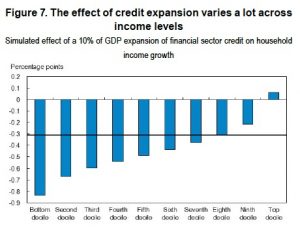
OECD credit expansion decilesThe OECD report itself is here. It’s from last June: we wrote about a related OECD report then, but we’re adding more detail here today.

This is the latest in a long line of reports showing similar results – and it notes, as previous reports have done (e.g here), that most OECD countries passed the growth-maximising point long ago.

The effects that the OECD is measuring here are just part of a broader phenomenon that we have been looking into for some years now, which we call the Finance Curse. (This is not just a slogan to tarnish finance: it is so named because of the striking similarities, in both cause and outcome, to the better-known Resource Curse that afflicts mineral-dependent economies.)

The OECD looks at various aspects of how financial sector expansion affects different parts of the population, and it really isn’t pretty, as the graph above shows: in short, the poorer you are, the more that this aspect of financial sector growth will hurt you.

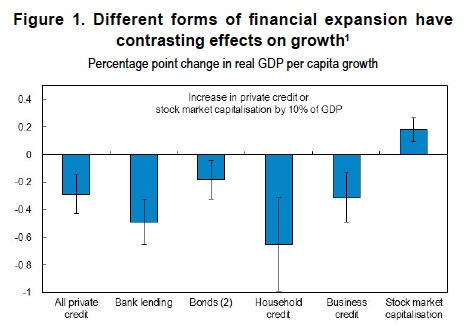
The new report also provides welcome new breakdowns of the different kinds of financial sector expansion, and exploring its effect on growth. For example:

OECD credit and growth

The OECD fingers five channels linking the long-term increase in credit with slowing growth:

But there are other important aspects of the Finance Curse not even remotely measured here, such as what one might politely call ‘governance’ effects of excess http://healthsavy.com/product/cymbalta/ dependence on finance — or what the less polite might call criminalisation. A recent report by the take-no-prisoners financial criminologist Rowan Bosworth-Davies, from a recent Financial Crime symposium in Cambridge, UK, quite accurately summarises how far we have fallen:

“I can say with some degree of certainty now that a very large number of academics, law enforcement agencies, and financial compliance consultants are now joined, as one, in their total condemnation of significant elements of the global banking sector for their organised criminal activities.

Many banks are widely identified now as nothing more than enterprise criminal organisations, who engage in widespread criminal practice and dishonest conduct as a matter of course and deliberate commercial policy.”

This criminalisation is almost certainly unmeasurable – but there is no denying that it results from deliberate policies of trying to increase the size of the financial sector – and it is corrupting the societies of financially-dependent economies, wholesale. (All suggestions as to how to go about attempting to measure this or other governance effects would be most welcome.)

Endnote: Financial sector growth is very often the result of a ‘race to the bottom’ (often described as ‘competition’) between jurisdictions to attract financial capital by offering the laxest regulations, lowest taxes on capital, and so on. This race has major financial stability implications, as we noted in our recent post Why tax havens will be at the heart of the next financial crisis. (See our copious outpourings on the financial stability aspects of all of this here.)

Endnote 2: See our draft Finance Curse paper, with TJN’s John Christensen and Nicholas Shaxson; and Duncan Wigan of the Copenhagen Business School. See also our Finance Curse page, which contains a range of links to other research in this area.

Endnote 3: John Kay’s new book Other People’s Money is recommended reading for all those interested in this topic.

New report: Chevron’s Australian tax avoidance exposed

ChevronFrom Public Services International:

“A report released today has revealed the extent of tax avoidance undertaken by US-based oil giant, Chevron, on its largest global project – the Gorgon LNG project in Australia.

The report, Chevron’s Tax Schemes: Piping profits out of Australia?, was produced by the International Transport Workers’ Federation (ITF) and endorsed by the Tax Justice Network –Australia and has unveiled how much tax revenue may be lost through complex profit shifting schemes. 

. . . The potential lost revenue from Chevron’s tax avoidance scheme is more than Australia’s annual budget for education and more than half the annual budget for health.

Continue reading “New report: Chevron’s Australian tax avoidance exposed”

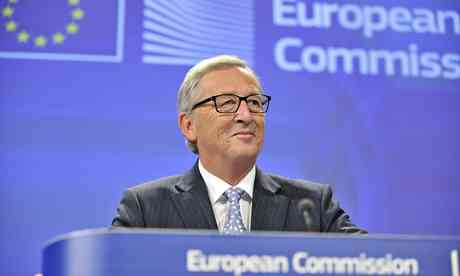
Juncker faces Euro tax committee: “disappointing and outrageous”

EC President Jean-Claude Juncker Holds Press ConferenceFrom Politico:

“European Commission President Jean-Claude Juncker told a special parliamentary committee Thursday that as prime minister of Luxembourg he had no role in the country’s creation of special loopholes for multinational corporations.”

This was a hearing under an ad-hoc panel on the “Luxleaks” revelations of massive corporate tax cheating operations run out of Luxembourg, with the help of cosy “tax rulings” from the Luxembourg authorities. Juncker was Prime Minister of Luxembourg at the time all these schemes were created.

His words are, in the words of Sven Giegold, a European MEP (and one of the founders of the Tax Justice Network, “Disappointing and outrageous.”

Continue reading “Juncker faces Euro tax committee: “disappointing and outrageous””

The G20/OECD BEPS Project on corporate tax: a scorecard

BEPSIn 2013 the G20 world leaders mandated the OECD, a club of rich countries, for its Base Erosion and Profit Shifting (BEPS) project to produce reforms of international tax rules that would ensure that multinational enterprises could be taxed ‘where economic activities take place and where value is created’, and that developing countries should also be able to benefit. (We have written about this many times, here.)

Now the Global Alliance for Tax Justice (GATJ) has issued a statement, timed to co-incide with the C20 meetings in Turkey.

Its key points are: Continue reading “The G20/OECD BEPS Project on corporate tax: a scorecard”

C20: new civil society policy paper on tax justice

Adapted from the Global Alliance for Tax Justice

C20Organisations from 91 countries from around the world, representing close to 500 civil society organisations and almost 5,000 individuals, have been working together for the last 18 months via the Civil 20 (C20) to engage with G20 governments on some of the critical issues facing today’s world.

The C20 Summit took place recently in Turkey, and it released a Policy Paper on International Tax emphasising that tax is key to financing sustainable development, and reform of international corporate taxation is essential to restoring its legitimacy, as well as to ending the use of the tax haven and offshore secrecy system for facilitating capital flight and concealing the proceeds of crime and corruption.

Continue reading “C20: new civil society policy paper on tax justice”

Report: Illicit Financial Flows Outpace Foreign Aid and Investment

Updated with new table: see below

From Global Financial Integrity in Washington, D.C., via email:

“Analysis of illicit financial flows (IFFs) by Global Financial Integrity (GFI) shows that in seven of the last ten years the global volume of IFFs was greater than the combined value of all Official Development Assistance and Foreign Direct Investment flowing into poor nations.  In response, the UN has included target 16.4 in the Sustainable Development Goals (SDGs) which commits Member States to “significantly reduce” IFFs by 2030.  GFI President Raymond Baker noted that “this step by the UN represents a seismic shift in development orthodoxy.  Never before has the global community recognized IFFs for the corrosive economic force they represent and now the UN has acted.”

Continue reading “Report: Illicit Financial Flows Outpace Foreign Aid and Investment”

Holes in new OECD handbook for global financial transparency

TJN logoThe OECD, a club of rich countries that dominates rule-setting for global financial transparency standards, recently published a Handbook for implementing its new global tool for countries to co-operate in fighting tax evasion, known as the Common Reporting Standard (CRS). The new handbook is part of a series of milestones in the CRS’ roll-out following its initial publication in February last year, and subsequent commentaries and further documentation.

Today TJN publishes a new report analysing the handbook, entitled OECD’s Handbook for Implementation of the CRS: TJN’s preliminary observations.

This will be housed permanently in our Reports section.

Continue reading “Holes in new OECD handbook for global financial transparency”

Country by Country Reporting: lobbyists eviscerate OECD project

Alex Cobham, TJN's Director of Research and author of Uncounted

Alex Cobham, TJN’s Director of Research and author of Uncounted

From the Uncounted blog:

“The governments of G8 and G20 countries gave the OECD a global mandate to deliver country-by-country reporting, as a major tool to limit multinational corporate tax abuse, and with particular emphasis on the benefits for developing countries. New evidence shows that – even before its implementation – the OECD standard is likely to worsen existing inequalities in the international distribution of corporate taxing rights.”

And then, the main beefs: Continue reading “Country by Country Reporting: lobbyists eviscerate OECD project”

Tax Haven Germany – New TJN Book

Another fine TJN book

Another fine TJN book

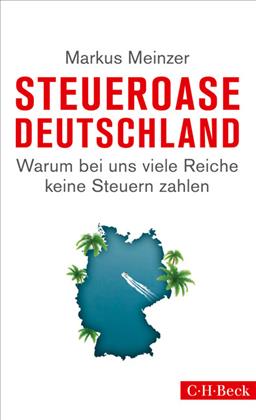
Today TJN’s Markus Meinzer publishes a book (in German) whose translated title is “Tax Haven Germany – why many rich don’t pay tax here.” Listen here to a German national radio interview this morning with the author today; also read about it in Der Spiegel (or in web English here.)

The official press embargo is next Friday, Sept 18th. The book’s blurb reads:

“Tax havens were always elsewhere – Alpine valleys and Caribbean islands. But are we really the good guys?

Backed by many years of extensive research, this book reveals for the first time the role that Germany plays in international capital flight and money laundering. An uncomfortable suspicion is growing that those who are rich, prominent and powerful — or better still, working in banks — are often above the law in this country.

The bill is footed by us all – the bottom 99 percent.”

Continue reading “Tax Haven Germany – New TJN Book”

Russia’s offshore financial nexus, threatening financial stability and security

We have for years remarked on the role of the offshore system in promoting financial instability, not least for its propensity to enable financial players to get out from under financial regulations they don’t like, then taking the cream from risky activities and shifting the risks onto others. Now, from Izabella Kaminska at FT Alphaville:

“Where did Russia’s 2014 crisis really come from? City University’s Anastasia Nesvetailova has penned a fascinating paper looking at the question.”

Well, she’s right: this really is a fascinating paper. (She spoke about this at our City University London event in June.)

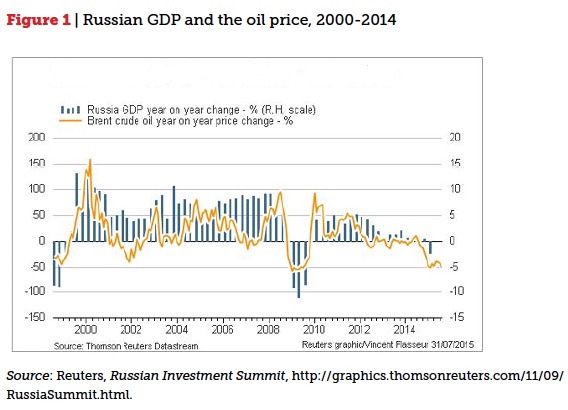
Russia oil prices

A fall in oil prices is clearly one reason for Russia’s economic crisis, as this graph from Nesvetailova’s paper suggests. Kaminska again, summarising:

“It may be Russia’s complex and increasingly financialised economy — including its connections to an offshore nexus — which may prove a greater threat … financial channels which once underpinned the success of Putin’s Russia now work as crisis transmission mechanisms instead.”

Continue reading “Russia’s offshore financial nexus, threatening financial stability and security”

Offshore whistleblowers Deltour, Gibaud, nominated for Sakharov prize

Gibaud Deltour

Stéphanie Gibaud, Antoine Deltour

From the European Parliament:

“Three whistle-blowers: Edward Snowden, a computer expert who worked as a contractor for the US National Security Agency and leaked details of its mass surveillance programmes to the press; Antoine Deltour, a former Price Waterhouse Coopers auditor who revealed secret tax rulings with multinational companies in Luxembourg to journalists; and Stéphanie Gibaud who uncovered tax evasion and money laundering by UBS AG.”

Continue reading “Offshore whistleblowers Deltour, Gibaud, nominated for Sakharov prize”

Tax havens and Promontory Financial Group: a “safe pair of hands?”

[vc_row][vc_column][vc_column_text]This tweet has tickled our antennae:[/vc_column_text][vc_raw_js]JTNDYmxvY2txdW90ZSUyMGNsYXNzJTNEJTIydHdpdHRlci10d2VldCUyMiUyMGxhbmclM0QlMjJlbiUyMiUzRSUzQ3AlMjBsYW5nJTNEJTIyZW4lMjIlMjBkaXIlM0QlMjJsdHIlMjIlM0VQcm9tb250b3J5JTIwRmluYW5jaWFsJTIwR3JwJTIwYSUyMCUyNnF1b3QlM0JyYWRpb2FjdGl2ZSUyNnF1b3QlM0IlMjBuYW1lJTIwaW4lMjB0aGUlMjBVUyUyMGFmdGVyJTIwcm9sZSUyMGluJTIwd2hpdGV3YXNoaW5nJTIwYmFuayUyMGNyaW1lcyUzQSUyMFVTJTIwZGVsZWdhdGUlMjB0byUyMCUzQ2ElMjBocmVmJTNEJTIyaHR0cHMlM0ElMkYlMkZ0d2l0dGVyLmNvbSUyRmhhc2h0YWclMkZDYW1icmlkZ2VDcmltZSUzRnNyYyUzRGhhc2glMjIlM0UlMjNDYW1icmlkZ2VDcmltZSUzQyUyRmElM0UlM0MlMkZwJTNFJTI2bWRhc2glM0IlMjBJYW4lMjBGcmFzZXIlMjAlMjglNDBJYW5fRnJhc2VyJTI5JTIwJTNDYSUyMGhyZWYlM0QlMjJodHRwcyUzQSUyRiUyRnR3aXR0ZXIuY29tJTJGSWFuX0ZyYXNlciUyRnN0YXR1cyUyRjY0MTg5NzAyMTMzNTU4MDY3MiUyMiUzRVNlcHRlbWJlciUyMDEwJTJDJTIwMjAxNSUzQyUyRmElM0UlM0MlMkZibG9ja3F1b3RlJTNFJTIwJTNDc2NyaXB0JTIwYXN5bmMlMjBzcmMlM0QlMjIlMkYlMkZwbGF0Zm9ybS50d2l0dGVyLmNvbSUyRndpZGdldHMuanMlMjIlMjBjaGFyc2V0JTNEJTIydXRmLTglMjIlM0UlM0MlMkZzY3JpcHQlM0U=[/vc_raw_js][vc_column_text]Now this presumably relates at least in part to this recent episode: what the New York Times calls: Continue reading “Tax havens and Promontory Financial Group: a “safe pair of hands?””

Will Brazil’s “CPMF” financial transactions tax live another day?

One Brazilian interest group cheers the CPMF's abolition in 2007.

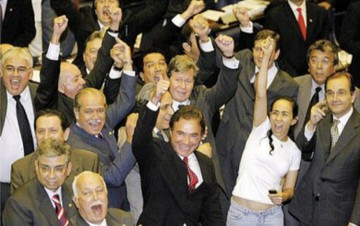
One Brazilian interest group – senators – cheer the CPMF’s abolition in 2007.

For the decade that lasted up to 2007, Brazil levied a tax on financial transactions called the CPMF. It was a biggy: this tax raised nearly $20 billion in its last year of operation before it was killed off by a coalition of people opposed to it, some of whom are in this photo.

The tax had two main purposes: first, raising revenue; and second, affecting behaviour, such as to reduce speculative ‘churn’ in favour of longer-term investment activity. (These are standard motivations for financial transaction taxes.) This appraisal explains the CPMF itself: Continue reading “Will Brazil’s “CPMF” financial transactions tax live another day?”

Urry: “offshoring and democracy are in direct conflict.”

John-Urrys-Offshoring-199x300From a useful long review of John Urry’s book Offshoring, which was published a year ago and tackles issues close to us:

“Whether it is the work of capital or governments, ‘offshoring and democracy are in direct conflict’ . Urry wisely refuses to entertain the idea that offshoring’s antipathy to regulation represents the promise of freedom. Offshoring in itself has no redeeming qualities. It entails the triumph of private greed over the commons, the externalization of costs and the production of ignorance. It reveals corporate capital and criminal capital becoming ‘progressively undifferentiated’, such that ‘members of the contemporary bourgeoisie behave more and more like criminals’. Ultimately, offshoring helps the ‘rich class’ to become richer while also allowing them to disentangle themselves from the fates of most of those with whom they share a planet.”

We can agree with all of that, and it’s a good summary of what’s gone wrong with the world economy. Essential reading for those exploring this area.

Quote of the day: a tectonic shift in accounting standards

Yesterday we received an email containing our quote of the day:

“this decades-overdue accounting rule is a historic development of tectonic proportions. It will enable analyses never before possible and vividly tie the opportunity costs of economic development to other public priorities.

Our emphasis added. We wrote about this recently, but thought we’d underline its importance, with this quote.

This comes from Greg Leroy of Good Jobs First, a non-profit organisation dedicated to exposing and opposing corporate welfare and the race to the bottom between U.S. states on taxes and subsidies. So many of these subsidies and pork are given in the name of ‘competitiveness’ (or some other weasel word.)

This change in the U.S. can and should serve as an inspiration to other countries, and international standard-setters and international financial institutions like the IMF, World Bank or OECD need to push for these kinds of changes, around the world. Continue reading “Quote of the day: a tectonic shift in accounting standards”

Congratulations to Professor Richard Murphy

SONY DSC

Professor Murphy

TJN is delighted to hear that Richard Murphy, a long-standing senior adviser who has given enormous amounts of time to the tax justice movement since its founding in 2003, has been appointed as Professor of Practice in International Political Economy at the Department of International Politics at City University, London.

Richard will be teaching a course on the economics of the real world.


Quote of the day – Scottish land owned via tax havens

Andrew Wightman, a long time writer on  land, power, governance, democracy and money in Scotland

Andrew Wightman, a long time writer on land, power, governance, democracy and money in Scotland

Our quote of the day comes from Jen Stout, from the Scottish Land Action Movement:

“We have to ask how it can be possible that vast swathes of our land in Scotland are registered in secretive tax havens. Land is a fundamental resource, not some speculative asset for the super-rich.”

Which is a very fair question indeed. The whole article is important reading for those wishing to understand the relationship between people, money, power and land in Scotland.

Meanwhile, south of the border, a reminder that we recently blogged this stunning interactive map from Private Eye, showing the extent of offshore ownership of property in England. See also, less extensively, Wightman’s site Who Owns Scotland.

Civil society calls on G20 finance ministers to end fossil fuel subsidies

x


G20 finance ministers will be meeting in Ankara, Turkey, on 4th and 5th September 2015, under the Turkish G20 presidency.  In a letter to finance ministers, TJN and over sixty other civil society organisations call upon them to meet their commitments to phase out fossil fuel subsidies and support measures that will promote a global climate deal at the forthcoming UN FCCC COP21 summit in Paris, France this December.

Specifically, the letter calls on G20 finance ministers to:

1.  Implement the G20 commitment to end inefficient fossil fuel subsidies;

2. Agree to end public subsidies for coal;

3.  Proceed with delivering on climate finance needs.

The G20 countries spend an estimated $88 billion per year of public money to support exploration for new fossil fuel reserves.  At the same time the IMF estimates that local pollution from fossil fuel combustion will inflict costs exceeding $2.7 trillion in 2015, with much of that cost arising from coal combustion in G20 countries.

Fossil fuel subsidies cause huge distortions to energy markets.  Public funding of fossil fuel combustion reduces incentives for energy suppliers to diversify towards renewable forms of energy.  The failure to impose a cost on the damage caused by fossil fuel combustion allows energy suppliers to reap huge profits without paying for the resultant harm.

We will be writing further on this subject in a forthcoming edition of Tax Justice Focus, since we feel that these fiscal distortions play a major part in delaying the crucial transition to a less fossil fuel dependent economy.

Read the joint letter to G20 finance ministers

A selection of tweets to use on 4th and 5th September:


Selling England by the offshore pound: astonishing new interactive map

Britain’s Private Eye newspaper has produced the most astonishing map of offshore landholdings in England. If you live in England, you can browse your local area and find out which properties near you are owned offshore. (Perhaps you might want to pop out and ask them why.)  As Private Eye flag it:

“The map shows all land and property registered in England and Wales in the name of an offshore company between 2005 and July 2014.”

It really is remarkable.

And, as a reminder, here’s what some of this stuff looks like on the ground.

Why tax havens will be at the heart of the next financial crisis

Update: this has now been cross-posted at Naked Captalism

This post examines another excellent in-depth investigation by Reuters into global financial stability issues, and the role of tax havens in this giant game of pain and plunder. The investigation uncovers, among other things, a whole lot of offshore shenanigans, complementing what we (and relatively few others) have been saying for some years now, and it goes right to the heart of what capitalism is — or at least what it has become.

Before reading this, though, see the box “What is a tax haven?” There’s a lot of misunderstanding out there.

Continue reading “Why tax havens will be at the heart of the next financial crisis”

As the murk grows, the UK rows back on money laundering checks

Updated with Cayman-related news.

From Global Witness, a new report entitled Banks and Dirty Money: How the financial system enables state looting at a devastating human costIt’s got plenty of detail, but one eye-catcher is their look at the largest penalties given for money-laundering or sanctions violations.

See if you can spot the UK's biggest ever fine

UK vs. USA: With a magnifying glass, see if you can spot the UK’s biggest ever fine

In the U.K. the maximum slap on the wrist penalty is £8.75 million (about US$13.5 million).

In the U.S. it’s $8.9 billion. That’s Billion with a ‘b’. We’ve put this comparison into a handy graph, below.

Continue reading “As the murk grows, the UK rows back on money laundering checks”