

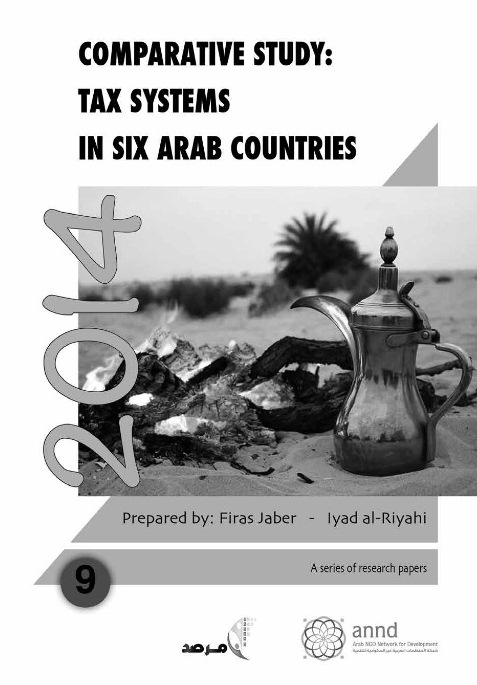
 This new study by the Arab NGO Network for Development (ANND), in collaboration with Christian Aid and Social and Economics Policy Monitor Palestine, explores how the tax systems of Arab countries have contributed to the lack of opportunity, growing inequalities, marginalisation and exclusion suffered by the majority of people living in the Arab region.
As the study explains, tax policies play a key part in shaping social and economic development:
“Tax policies are considered one of the most important issues in the redistribution and mobilization of local resources and could correct some of the economic imbalances arising from the presence of special privileges for a particular social segment inside Arab societies.”
The study examines the tax regimes of six countries – Egypt, Jordan, Lebanon, Morocco, Palestine and Tunisia – and identifies common features including aid related conditionality and the scale of external debt, which has reached such large proportions that it is inhibiting the possibilities for future development. As the report states:
“First, the large and significant volume of external support provided to these states in order for them to fulfill their various obligations and spending within the general budget. This support functions primarily as a condition of social, economic, and political policies imposed on Arab countries, which we would argue are at the expense of these countries’ poor citizens.
Second, the large size of external debt and its accumulating interests are restraining the possibility of launching a self-reliant development plan in the Arab region, due to the interests taking up a significant portion of the budget. This poses a danger to the concept of sustainable development for future generations as well, who will ultimately be the ones paying the price. In addition, loans and debts are imposing further socio-economic constraints in countries such as Jordan, Egypt, Palestine, Lebanon, Tunisia, and Morocco, especially due to the huge reduction in social spending, and the lifting of subsidies on basic goods and fuel. This leads to an increased burden on the poor through imposing high tax rates, which in turn leads to the creation of more poverty.
In other words, external grants and loans are intended to help revive state economies and allow them to spend in order to reinvigorate the economy and create economic growth. However, our work shows that they ultimately lead to exactly the opposite.”
This is an important study, which signals a need to completely rethink the aid / development paradigm in Arab countries and beyond. Read the report here, and read New Internationalist’s challenging views on NGOs and development here.
The author

Related articles
UN tax convention hub – updates & resources

The ‘wealth exodus’ was manufactured by the press. The press complaints body IPSO must investigate or step aside.

Review: Bloomberg’s reporting of an exodus of billionaires worth $160 billion does not hold
Launching a new tool to reveal the global extent of illicit financial flows and how to tackle them

UN Framework Convention – Roundup of the Fifth Session of Negotiations
Notes on the UN tax convention draft protocol on dispute prevention and resolution
11 September 2026

The European Court of Justice strikes against transparency again. Our response should be to call for an end to corporate limited liability
Report of the Fifth Session of negotiations on the UN tax convention
4 September 2026
Submission to Workstream I on Co-Lead’s Zero Draft of UN Framework Convention on International Tax Cooperation (post-Fifth Session)
28 August 2026
Submission to Workstream II on Taxation of Income from Cross-Border Services (post-Fifth Session)
26 August 2026
Strengthening public resource mobilization through tax justice
25 August 2026