


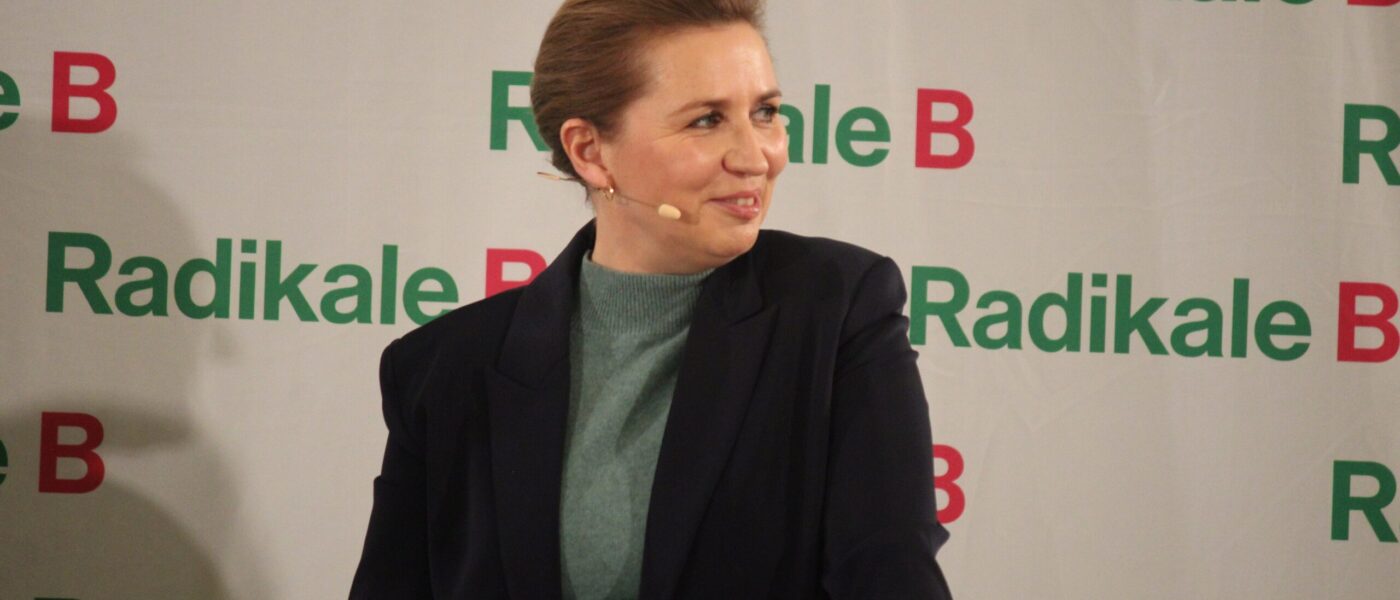
From the position of an incumbent doomed to a historic rout, Mette Frederiksen has led her Social Democrats to remain the largest party and now looks likely to stay in power. With the backing of the largest bloc in Denmark’s new parliament, Frederiksen was appointed yesterday to the key role of creating a majority governing coalition.
There are two reasons for this remarkable turnaround, achieved in just a few months: standing up for national sovereignty against the corrupt oligarchy of the US regime, and standing for real change at home through the introduction of a wealth tax.
While Frederiksen’s stance against US President Trump dominated international news coverage, the Danish election was largely fought on domestic issues, with the Social Democrats’ late-stage wealth tax pledge widely seen as turning the tide for the party.
With big wins for the progressive parties that have long backed wealth taxation, the message is clear – and not just for Denmark, but for political parties around the world.
Alex Cobham, chief executive of the Tax Justice Network, said:
“Wealth taxes save jobs, democracies and the planet – and now Prime Ministers too. Governments that have been ignoring overwhelming public support for wealth taxes in their countries should take note of this remarkable comeback story.1
“Our economies are supposed to let people earn the wealth they need to lead secure and comfortable lives, but most countries’ tax rules make it easier for the superrich to collect wealth than for the rest of us to earn it. Collected wealth like dividends and rent income get taxed a lot less than earned wealth like wages and salaries. This has let the superrich collect extreme wealth to the point of making our economies insecure, and leaving far too many of us economically vulnerable.
“There’s no shortage of evidence showing that extreme wealth shrinks economies, makes people poorer and threatens democracy.2 The best way to protect people, economies and planet from the harms of extreme wealth is to end the special tax treatment that collected wealth gets over earned wealth, which is what the proposed Danish wealth tax can do.”
Support for taxing extreme wealth grows at highest levels as exodus claims rebuffed and contradicted
Frederiksen became the second head of state of an OECD country to embrace taxing extreme wealth in recent months, following South Korean President Lee Jae Myung’s direct public confrontation of misinformation about millionaires leaving South Korea due to concerns about inheritance tax.3 Similar scare stories were published in Denmark around the Social Democrats’ wealth tax pledge in the lead up to the elections.
President Lee condemned as “fake news” the Korean Chamber of Commerce’s citing of the widely discredited Henley & Partners report which has been behind the vast majority of global news stories about millionaires leaving countries to avoid higher taxes. Referencing the Tax Justice Network’s debunking of the Henley & Partners report, President Lee said: “Deliberate fake news that tries to cloud the judgment of sovereign people who make policies is an enemy of democracy”.4
In response to the criticism, the Henley & Partners report author told The Korean Times that the report’s claims on millionaires migrating are “modeled estimates” rather than “precise counts”, which appears to contradict the Henley & Partners report’s public methodology.5 The Henley & Partners report claims it “tracks the movements of over 150,000 high-net-worth individuals in its in-house database” and that “[i]ts statistics are therefore mainly based on the work locations of the individuals.”6
The concession from the report’s author is the latest in a series of setbacks for the report, which has failed forensic accounting tests for data fabrication and manipulation7 and has been debunked by data from tax authorities8 in the UK and South Korea. Henley & Partners claims to have commissioned an audit of the approach in 2025 following public backlash but has not yet published any findings – although the author has publicly conceded the data to be “skewed”.10
-ENDS-
Notes to editor
- See Earth4All’s polling finding overwhelming public support for taxes on extreme wealth across G20 countries, Oxfam’s polling finding that nearly three-quarters of millionaires polled in G20 countries support higher taxes on wealth and over half think of them extreme wealth is a “threat to democracy”, another Oxfam poll finding the vast majority of the UK public support taxing extreme wealth and a Patriotic Millionaires UK’s poll finding majority support among UK millionaires for a wealth tax
- Researchshows a large rise in wealth among the 1% in the US over the past 40 years did not lead to more investments, and instead resulted in dissaving among non-rich households. Research also shows that “a large rise in inequality generates a saving glut of the rich, which can push an economy into a debt trap characterized by low interest rates, high debt levels, and output below potential”. Indebtedness of non-wealthy households brought on by extreme wealth of the richest households brings about lower productivity. Conversely, another study found that wealth taxes resulted in more investments. Research shows large rise in savings among the 1% in the US over the past 40 years brought on dissaving among non-rich households. A G20 report authored by Nobel Laureate Joseph Stiglitz concluded that the rise of extreme wealth is a “threat to democracy”.
- Read more about the South Korean President’s rebuking of millionaire exodus misinformation here.
- Read our debunking of the Henley & Partners report here; see the South Korean President’s public statement here.
- Read the response from the author of the Henley & Partners report here.
- See the Henley & Partners report’s methodology here.
- Read the study published in the FT concluding that the Henley & Partners likely fabricated its numbers here.
- Read about the HMRC data debunking non-dom exodus claims here; read about Korea’s National Tax Service Commissioner Lim Kwang-hyun debunking of Henley & Partners claims with government data here – and see his Facebook post here.
- See Henley & Partners announcement of an audit of its report in response to public criticism in this Spears article.
- The Henley & Partners report’s author Andrew Amolis acknowledged in an interview with BBC More or Lessthat the report’s sample is skewed. A transcript of the interview is available in our report (see page 9).