Carolina Rodrigues Finette ■ Tax justice and the women who hold broken systems together

Published:
4 March 2026Reading time:
3 minMy mother was the first woman in my family to go to university.
She worked. A lot.
She raised her children alone. She cleaned, cooked and cared. She endured long commutes, low wages and systems that never quite worked in her favour.
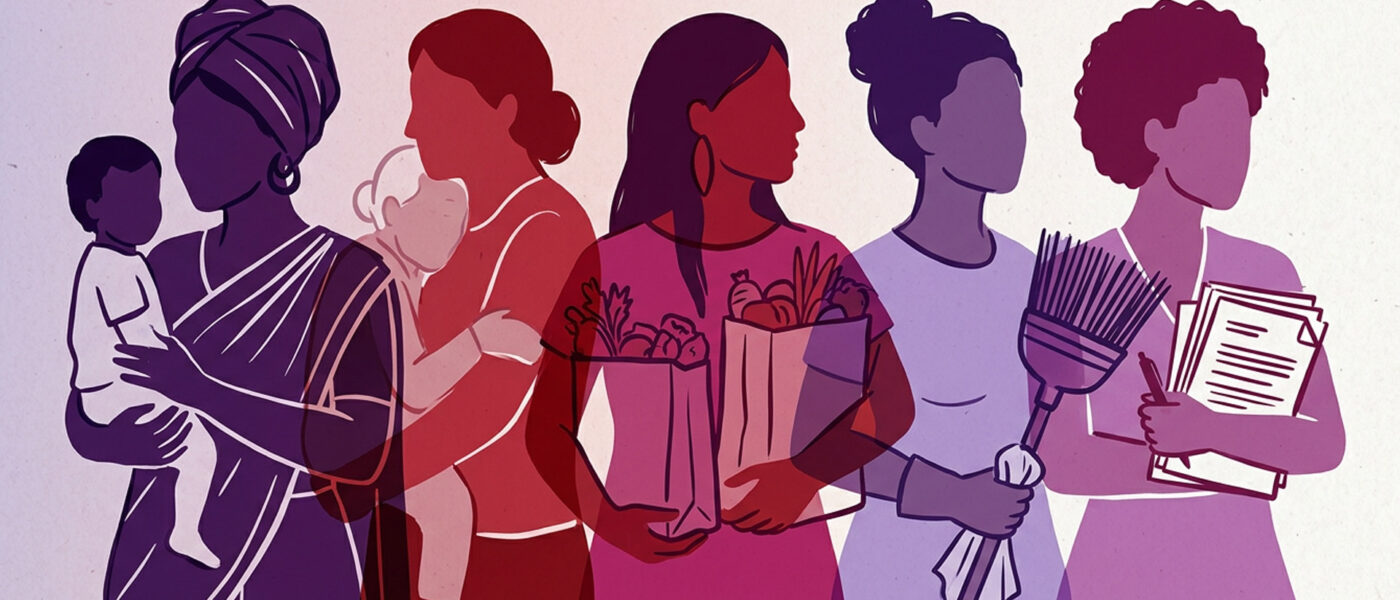
I grew up in Brazil, where this was common. In most families around me, it was mothers, grandmothers and aunts who held everything together.
Now, working with colleagues from other parts of the world, I hear stories that sound so similar they feel like déjà vu. Different accents. Different policy settings. Different continents. The same pattern. Women step in where systems fall short. Women compensate for what states fail to provide.
This week, as we mark International Women’s Day, gather at the Commission on the Status of Women, reflect on the follow-up to the Beijing Declaration and Platform for Action and the Bogotá Declaration, I keep thinking about those women.
Because when we talk about women’s rights, we are talking about them. And when we talk about tax justice, we are talking about changing the conditions that shape their and our entire lives.
What Brazil’s tax system means for women
Through the shadow report to the Committee on the Elimination of Discrimination against Women in 2024, in collaboration with Inesc, Latindadd and RJFALC, we examined how Brazil’s tax and fiscal policies affect women’s rights.
Brazil has one of the most regressive tax systems in the world. It relies heavily on indirect taxes, which take a larger share of income from people who earn the least. The households most affected are often headed by women, especially Black women.
These reductions were framed as necessary adjustments, as if they were neutral or unavoidable. But budgets are never neutral. They reflect what a government chooses to prioritise and what it is willing to reduce. While social spending was constrained, tax incentives and exemptions that benefited higher-income groups remained largely intact.
These budget decisions shape whether social support is accessible, whether systems respond and whether women are left to manage alone. For women in lower-income households, the consequences are immediate.
Brazil is not an isolated case
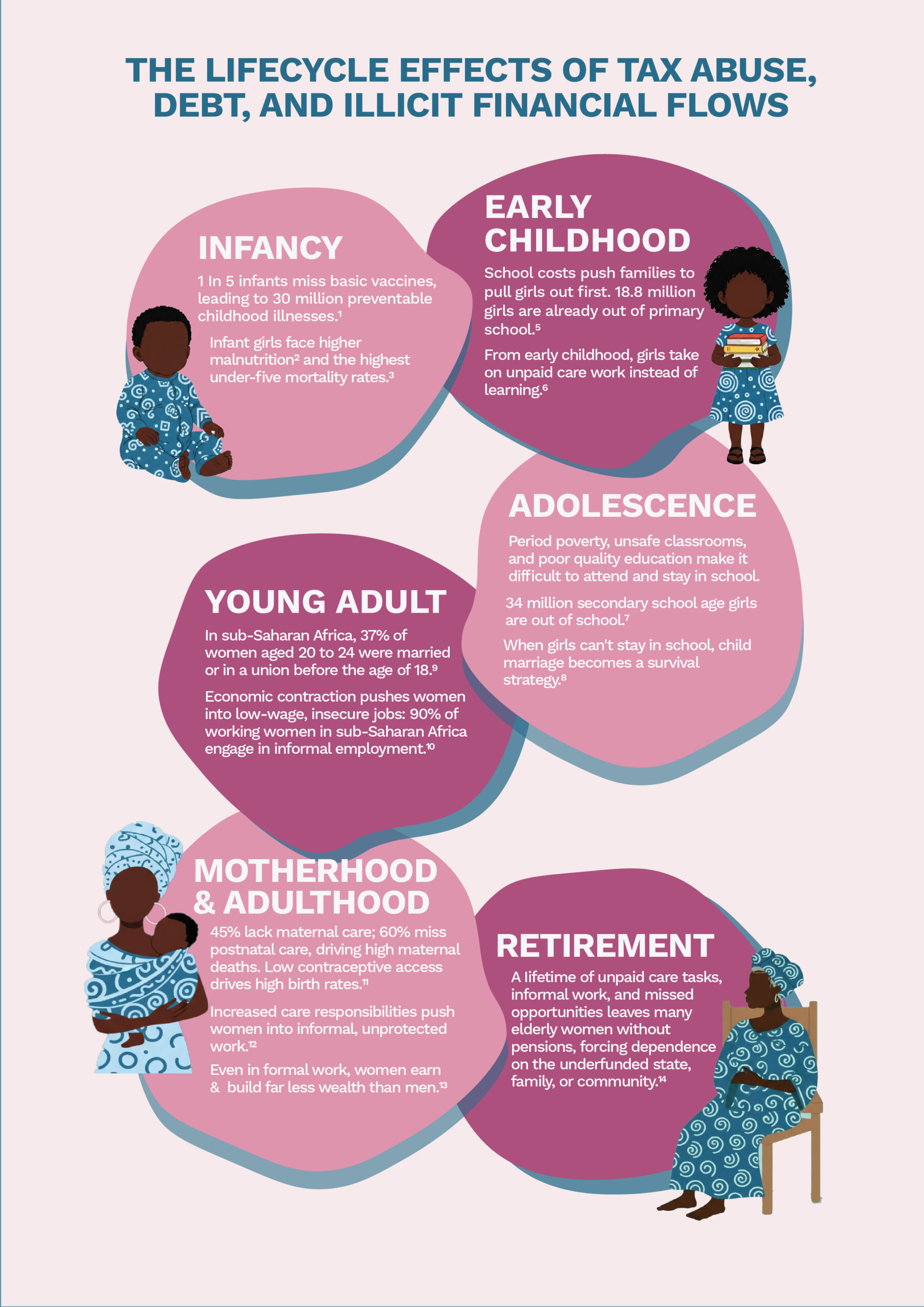
In 2025, we expanded this strand of research in Bled dry, in collaboration with AIDC and CESR. This time we analysed social impacts of tax abuse, illicit financial flows and debt across African countries. The pattern felt painfully familiar. Different histories and institutions, but the same underlying model of revenue loss, debt pressure and weakened public systems.
In parts of Africa, one in five infants miss out on basic vaccines. By adolescence, millions of girls are already out of school. The majority of working women are concentrated in informal employment.
Different countries. Same logic.
Revenue is lost to tax abuse. Debt pressures intensify. Public services weaken. Women absorb the impact across generations.
Why we are mobilising through the Global Days of Action campaign
The global gender gap is projected to take more than a century to close at the current pace. That is far too long to ask women to keep compensating for broken systems. This is why we are part of the Global Days of Action on Tax Justice for Women’s Rights.
This year’s theme, “Tax Justice for the Human Right to Care”, speaks directly to realities many of us recognise. Care is not a private burden to be managed inside families. It is a public responsibility.
Care requires investment. Investment requires revenue. Revenue requires fair taxation.
As the Commission on the Status of Women convenes and we reflect on the Beijing Declaration and Platform for Action, governments are also negotiating the future of international taxation through the UN framework convention on international tax cooperation. Decisions are being made about transparency, taxing rights and whether multinational corporations and the wealthiest individuals will finally pay their fair share. For the first time, these negotiations are unfolding in a space that aspires to broader global legitimacy and inclusivity, with countries from the Global South participating on more equal footing in shaping international tax rules.
Those decisions will shape whether women continue to carry systemic failures or whether states build strong public care systems that redistribute responsibility instead of concentrating it at home.
International Women’s Day is often framed as a celebration. For us, it is also about accountability.
Thirty years after Beijing, we cannot speak about gender equality without speaking about how governments raise and spend money. We cannot talk about empowerment while allowing tax abuse to continue. We cannot demand care without funding it. As negotiations toward the UN tax convention continue this year, this is a once in a generation chance to reshape global tax rules so they support the commitments made to women’s rights decades ago. Tax justice will not solve everything. But without it, gender equality remains underfunded and fragile.
So this week, as movements mobilise, we are clear about what this work means.
It means making taxes work for women.
In Brazil.
Across Africa.
Everywhere.
Donate to Tax Justice Network
We rely on donations from people like you who value our research and campaigning to keep our work going. Help us do more work like the work above with a donation.
The author
Related articles

Taxing Ethiopian women for bleeding
Disservicing the South: ICC report on Article 12AA and its various flaws
11 February 2026
What Kwame Nkrumah knew about profit shifting
The last chance
2 February 2026
After Nairobi and ahead of New York: Updates to our UN Tax Convention resources and our database of positions
The tax justice stories that defined 2025

The best of times, the worst of times (please give generously!)

Let’s make Elon Musk the world’s richest man this Christmas!

Admin Data for Tax Justice: A New Global Initiative Advancing the Use of Administrative Data for Tax Research