Florencia Lorenzo ■ After Nairobi and ahead of New York: Updates to our UN Tax Convention resources and our database of positions

New Convention draft and background documents to watch
The UN has released a new draft convention text and background documents for each of the workstreams ahead of the next round of negotiations in New York (available here). At the same time, we are publishing an update to our comprehensive database of the positions taken by individual countries thus far – so it’s possible to see how different positions are reflected, or not, in the text so far. Comparing the newly issued text with the positions States have adopted in their oral and written submissions, especially those from the latest round of negotiations in Nairobi, reveals interesting patterns and sheds light on how the Convention is gradually taking shape through successive interactions.
What happened in Nairobi?
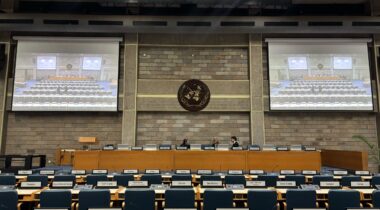
Nairobi marked an important moment in the process leading to an UN Framework Convention on International Tax Cooperation (UNFCITC). Demands for fairer global tax governance have long been driven by countries from the Global South, particularly since the Addis Ababa Agenda, but this was the first time that formal negotiations of this process took place on the African continent. Throughout the sessions, delegations and stakeholders repeatedly noted that holding the negotiations in Nairobi made the process more accessible. In particular, it enabled strong participation from stakeholders who are often unable to attend tax negotiations because of visa barriers, travel costs, or limited formal channels for engagement.
How we covered the negotiations
We followed the negotiations closely and covered the debates on our UN Tax Convention landing page. For each topic discussed, the page includes a summary of how discussions unfolded. The landing page— recently updated—also brings together key resources such as upcoming negotiation dates, an FAQ, thematic sections, one-pagers on key concepts and additional background materials.
Submissions and database update
After the sessions concluded, member states and other stakeholders were invited to submit written comments on the papers prepared by the Secretariat for the Framework Convention workstream (WS1) and the dispute resolution workstream (WS3). The Tax Justice Network submitted contributions to both WS1 and WS3. We also co-signed the joint submission coordinated through the CSO mechanism, as well as specific submission focused on gender-related aspects.
Following this consultation, the Secretariat published all written submissions, which we have begun integrating into our Who Wants What database, which can be accessed via our UN tax convention webpage and available in a summarising report. This public database has tracked countries’ positions since the start of the negotiations and is now being updated to reflect the latest contributions. Users can explore positions by country, by article, or over time. This is an ongoing, collaborative project developed with academics from the University of Virginia’s Law International Human Right Clinic. We aim to update the database quickly, as a helpful tool as we navigate this process, but there is a trade-off between the speed and the exactitude at which we keep track of all the positions. Errors may occur, and we thus encourage readers to flag any issues they identify. As much as possible, we try to stick to the specific text and wording raised by oral and written submissions.
Trouble viewing this table? Click here to view it in a new tab.
Mapping arguments and narratives in the negotiations
One useful feature of this database is the nuance it allows in analysing country positions, particularly in mapping how specific arguments are framed and defended. Unsurprisingly, many of the themes found in the written submissions echo points previously raised by country delegations in earlier sessions. Those closely following the process will, by this stage, be familiar with the repeated use of certain expressions to limit the scope or lower the ambition of the framework convention. Notions such as sovereignty, the relationship with other instruments and institutions, or the absence of clear definitions – all legitimate considerations in the development of an effective and ambitious framework – are too often invoked, or misused, to justify weakening that ambition.
Sovereignty and cooperation
For instance, consider the concept of sovereignty, raised in 53 interventions, either in Nairobi or in written submissions. The large majority of these positions relate to Article 5 on High Net-Worth Individuals (15), Article 8 on Harmful Tax Practices (10), and Article 10 on Dispute Prevention and Resolution (10).
Most positions referring to sovereignty are grounded in a way of thinking that views sovereignty as restrictive, if not directly in opposition, to cooperation. In this view, whether a country decides or not to implement a progressive tax system, or the types of tax incentive it decides to propose is a matter of domestic decision-making. The problem with this approach is that it too often overlooks how a country’s tax rules can lead to international spillovers, undermining each other’s sovereignty. For instance, tax regimes implemented in one country can have significant effects on the capacity of others to enact their own rules. Further, the claim that the taxation of high-net-worth individuals is a domestic issue forgets the reality that wealthy individuals source their income and wealth in multiple jurisdictions, and information necessary to enact domestic laws may be dependent on exchange of information.
In other words, guaranteeing and strengthening sovereign tax systems must be a key objective of international tax cooperation, but the status quo fails to secure that. While previous efforts to address the cross-border spillovers of such regimes have often been marked by unfairness and even hypocrisy, the very objective of the General Assembly’s mandate is to address these cross-border implications in a fairer and more inclusive setting. As the Kenyan delegate defended in Nairobi, for Global South countries, fighting the negative spillovers of higher-income countries’ aggressive tax practices is in itself a matter of safeguarding their national sovereignty. This notion is also echoed in Brazil’s written submission which advocates, in the context of Article 4, for “fiscal sovereignty and fairness in the apportionment of taxing rights, restoring the capacity of source countries to tax income-generating activities provided within their borders without necessarily requiring a physical presence”.
In addition, invoking sovereignty should not preclude forms of cooperation that entail some degree of policy coordination—including, for example, coordinated approaches to tax multinational corporations or high-net-worth individuals. As important as creating an enabling environment for protecting domestic tax-sovereign decisions is, the Convention should also open the door to coordinated approaches that help Member States advance its aims, including establishing an inclusive, fair, transparent, efficient, equitable and effective international tax system for sustainable development, enhancing the legitimacy, certainty, resilience and fairness of international tax rules, and addressing challenges to strengthening domestic resource mobilisation.
The need for an inclusive and universal framework in response to limitations of pre-existing institutions
Another familiar argument for those following the debates is the idea of duplication, or that the Framework Convention should not include in its scope or simply defer the treatment of topics which have been negotiated through pre-existing instruments or forums. Among the 139 positions that address the relationship with other instruments or institutions and the risk of overlap, the large majority focus on Article 8 on Harmful Tax Practices (38) and Article 6 on Mutual Administrative Assistance (21), followed by Article 4 on the Allocation of Taxing Rights (17) and Article 5 on High Net-Worth Individuals (16).
Most concerns about overlap focus on two specific forums: the Global Forum – and particularly Multilateral Convention on Mutual Administrative Assistance with its subsidiary instruments for exchange of information – and the Forum on Harmful Tax Practices. With regard to Art. 4, existing bilateral treaties are invoked, with some countries advancing the strained argument that the mere fact of agreement between two parties is sufficient to render such treaties fair. It is indicative of a bias in the current status quo that very limited concerns about relationships with pre-existing instruments, or about overlap more broadly, are raised in relation to the articles on illicit financial flows or sustainable development.
In addition, as eloquently argued by countries such as Kenya, Nigeria, Ghana, Sierra Leone and Rwanda —both during discussions in Nairobi and in some of their written submissions — while the relationship with pre-existing instruments and forums is an important point, it cannot be ignored that existing forums lack universal participation and do not appear to deliver equally for all UN Member States. The momentum behind the call for a Framework Convention and the adoption of new commitments should reflect the desire among countries to generate the political will necessary to move beyond the limitations of the current system and achieve better outcomes.
Take, for instance, the Convention on Mutual Administrative Assistance. The 2010 amendment of this legal instrument represented a great achievement in international tax cooperation, as it allowed a broader set of countries to become party to the Convention and join the legal framework to engage in exchange of information and other forms of cooperative assistance. Yet, from a technical perspective, the Convention and its associated Multilateral Competent Authority Agreements still have significant problems, particularly regarding reciprocity requirements and the use of reservations.
With respect to reciprocity, the strict requirement in some competent authority agreements that all parties provide information at the same pace imposes equal obligations on countries with vastly unequal export of financial sectors. Large financial centres are expected to exchange information under the same conditions as low-income countries. Given the higher likelihood that wealthy individuals conceal assets in major financial hubs rather than in poorer jurisdictions, this formal equality results in a substantively biased arrangement. This does not imply that these countries would not participate, and in fact the Africa group made sure to strengthen the commitment, including by proposing the removal of “as such exchange become possible” from the article on High-Net-Worth Individuals. But strict reciprocity remains a clear obstacle to effective exchange in practice.
Regarding reservations, as discussed in previous research, the Convention allows countries to opt out of certain forms of cooperation. These include the exchange of information covering a broader range of taxes and assistance in the collection of tax debts. In practice, this “flexibility” allows certain developed countries to pick and choose which countries they want to provide a broader access cooperation to, for instance, by adopting more comprehensive forms of cooperation through regional instruments, while denying equivalent treatment to developing countries. Beyond these technical concerns, the political institutional framework built on top of the Convention, the Global Forum, was established under the umbrella of the exclusionary OECD, and despite its relatively formal autonomy, it is not an adequate substitute for a truly universal body with inclusive decision-making at the United Nations.
Definitions and the concept of illicit financial flows
At the same time, this concern for coherence with existing processes is applied unevenly. In certain areas, pre-existing discussions appear to be strategically set aside, most notably with respect to existing definitions of illicit financial flows. Clear and workable definitions are essential for the effective development of the Framework, and this will be an important element of the upcoming work of the Secretariat and Member States. However, concerns regarding definitions are not evenly distributed, but are instead heavily concentrated in Article 7 on illicit financial flows. Of the 68 positions that raise issues related to definitional clarity, 27 focus on this article. Concerns about definitions are also prominent in Articles 4 on the allocation of taxing rights (13), Article 5 on High Net-Worth Individuals (12), and Article 8 on Harmful Tax Practices (11).
However, illicit financial flows are not a concept without history. It can be traced back to the African Union and the Economic Commission for Africa’s High-Level Panel on Illicit Financial Flows out of Africa, chaired by former South African President Thabo Mbeki. As India clearly noted in Nairobi, a statistical definition has already been agreed as a part of the Sustainable Development process, one that includes both tax avoidance and tax evasion. This is not to dismiss the existence of disagreements over definitions – which might remain – but rather to underscore that these discussions do not begin from a blank slate.
What’s coming up
International tax negotiations are at a critical moment. The side-by-side agreement, negotiated behind closed doors, makes it all the more urgent to advance towards a system of international tax governance that is responsive and delivers for the needs of all. The UN tax convention is a rare opportunity to do just that.
In 2026, the Ad Hoc Committee will convene three meetings: the first in February in New York, followed by a second session in August, also in New York, and a final session in November/December in Nairobi. It is deeply concerning that, at this critical moment in the negotiations, the participation of certain stakeholders is at risk due to visa-related barriers.
We need to deliver an instrument that reflects the views of different countries committed to building a fairer, more effective international tax system. The database, which is an ongoing effort to understand what different countries aspire to achieve in this process, is an effort to assist in that.
Stay tuned to our UN tax convention webpage for a detailed analysis of these documents and insights into what to expect at the next negotiating session.
The author
Related articles

Tax justice and the women who hold broken systems together
Disservicing the South: ICC report on Article 12AA and its various flaws
11 February 2026

What Kwame Nkrumah knew about profit shifting
The last chance
2 February 2026
The tax justice stories that defined 2025

2025: The year tax justice became part of the world’s problem-solving infrastructure

Bled dry: The gendered impact of tax abuse, illicit financial flows and debt in Africa
Bled Dry: How tax abuse, illicit financial flows and debt affect women and girls in Africa
9 December 2025

Two negotiations, one crisis: COP30 and the UN tax convention must finally speak to each other