


Published:
11 December 2025Reading time:
4 minOver the past decade, the use of administrative tax data has somewhat quietly transformed academic research on tax abuse, compliance, and enforcement. These datasets—corporate tax returns, country by country reports, transaction-level customs records, payroll files, and other administrative sources—make it possible to study firm behaviour, compliance, and tax avoidance with a level of precision that survey or macro data simply cannot provide.
As we increasingly worked with such data at the Tax Justice Network, in collaboration with colleagues across governments and research institutions around the world, it became clear that administrative data is not just valuable; it is indispensable for understanding how tax systems function in practice rather than in theory.
But alongside this immense value, we also saw a high level of fragmentation. Every country, every institution, every research team had its own systems, protocols, formats, and access procedures. Some governments operated full-fledged secure research labs; others relied on informal arrangements or ad-hoc agreements tied to specific individuals. Even among researchers, knowledge about where administrative data existed—or how it could be accessed—tended to travel through personal networks rather than through any systematic channels. The result was predictable: duplicated efforts, steep learning curves, and missed opportunities for collaboration. We saw skilled researchers struggling to find basic information about what had already been done, and tax administrations unsure how their data was being used elsewhere or how to structure new partnerships.
That experience is what led us to launch Admin Data for Tax Justice, a new initiative aimed at reducing this fragmentation and strengthening global collaborations around administrative tax data. The central idea is simple: if we want more evidence-based tax policy, we need structures that make it easy for researchers and tax administrations to work together—ethically, securely and efficiently. That means mapping the existing research, documenting where administrative data has been used and how, supporting institutions as they develop or expand their own data-access infrastructures, and creating opportunities for networking across two groups of stakeholders that have remained largely isolated in the past: researchers and tax administration staff.
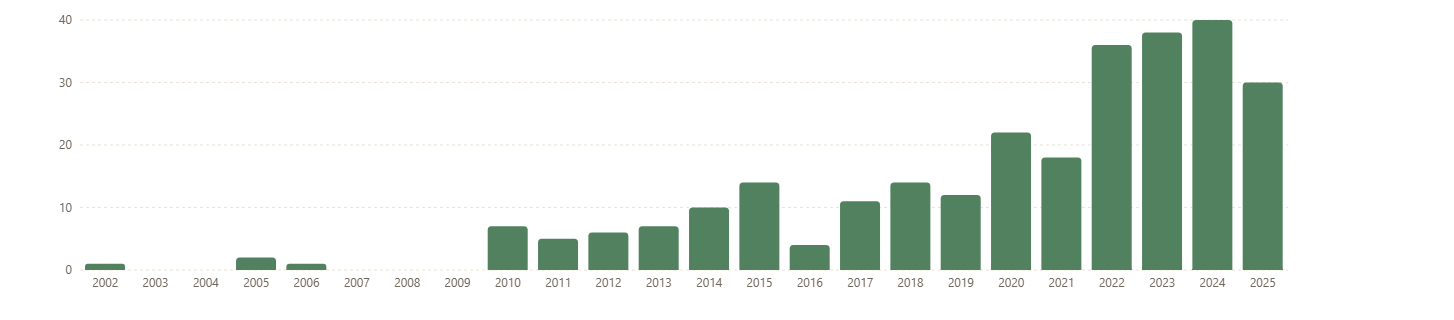
A major step toward that goal is the release of the initiative’s website, available today at admindata.taxjustice.net, providing the first systematic database of academic and policy research using administrative tax data worldwide. The database already contains hundreds of papers, covering a wide range of countries, datasets, and empirical strategies. This makes the field visible in a way it has never been before: early-career researchers can quickly see what has been done in which countries using which data; tax administrations can observe how comparable data is used elsewhere; and funders can identify gaps where new investments would have the greatest impact. It is also a foundation on which we can build better standards—whether for documentation, anonymisation, secure access, or cross-institutional collaboration. The website will be filled with such resources as the initiative develops. To illustrate how rapidly this field has grown, the figure below shows the number of papers in the database published over time. The trend is unmistakable and confirms what many of us have seen at recent academic conferences and workshops: administrative data is becoming central to modern tax research, and the growth in output reflects both the increasing availability of data and the expanding demand for rigorous, micro-level evidence.
We are launching the initiative formally through a virtual event on 15 December 2025, at 16:00 CET, where we will introduce the website and the database and discuss its role in building a more connected and accessible research ecosystem. This will be followed by a high-level panel discussion with leading researchers and policymakers who have helped shape the field of administrative-data research: moderated by Alex Cobham (Chief Executive, Tax Justice Network) and featuring Annette Alstadsæter (Professor of Economics, Skatteforsk – Centre for Tax Research, Norwegian University of Life Sciences), Pierre Bachas (Senior Economist, World Bank and EU Tax Observatory), Kat Bilicka (Lars Peter Hansen Associate Professor of Economics and Statistics, Utah State University), Abdul Muheet Chowdhary (Senior Programme Officer, South Centre), and Giovanni Occhiali (Development Economist, International Centre for Tax and Development). The discussion will examine the analytical potential of administrative microdata, lessons from successful data-access models, and the institutional conditions required for secure, ethical, and long-term data use. Panellists will also reflect on how better data infrastructures can transform research on tax avoidance, compliance, inequality, and public-sector capacity.
The initiative is supported by a growing network of partners, including Skatteforsk, the EU Tax Observatory, UNU-WIDER, the World Bank, the Institute for Fiscal Studies (TaxDev), the International Centre for Tax and Development, UNCTAD, United Nations Economic Commission for Africa, ODI Global, the South Centre, and Charles University.
Let us know if your institution would like to join the initiative!
The virtual launch will also pave the way for the initiative’s first in-person workshop in Prague, bringing together 35 researchers and tax-administration partners from 19 countries to share lessons, identify next steps, and strengthen the foundation for long-term collaboration. Further events are planned for 2026, including a regional convening in Accra in Q2, as we expand the initiative’s global reach and continue building a network capable of supporting better tax research and better tax policy worldwide.
The author

Related articles

Taxing Ethiopian women for bleeding

Tax justice and the women who hold broken systems together

The bitter taste of tax dodging: Starbucks’ ‘Swiss swindle’

What Kwame Nkrumah knew about profit shifting
The last chance
2 February 2026
The tax justice stories that defined 2025

The best of times, the worst of times (please give generously!)

2025: The year tax justice became part of the world’s problem-solving infrastructure

Bled dry: The gendered impact of tax abuse, illicit financial flows and debt in Africa
Bled Dry: How tax abuse, illicit financial flows and debt affect women and girls in Africa
9 December 2025