

Event description
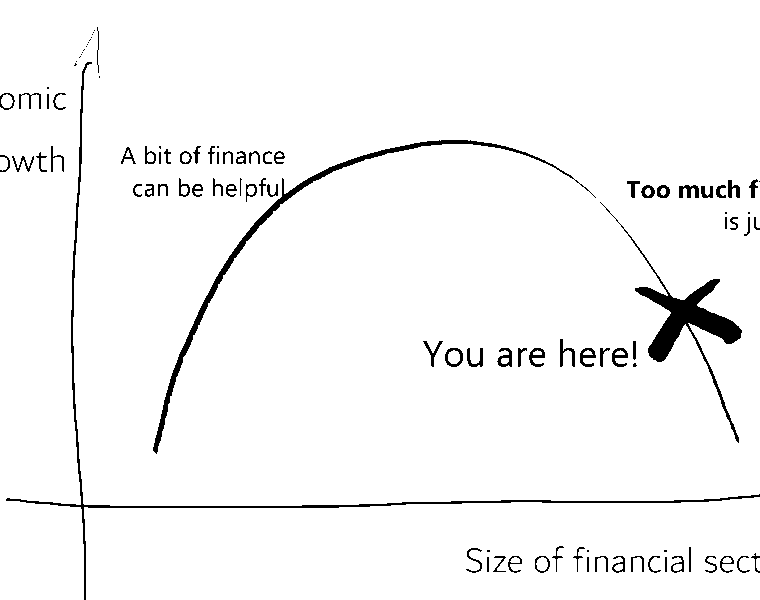
The phenomenon of ‘too much finance’ – the consistent research finding that an outsized financial sector undermines the economic performance of the host country – remains underappreciated in policy design and public awareness. The resulting policy failure has direct social costs, including those of needlessly high inequalities. ‘Too much finance’ is a challenge seen around the world, and the UK is especially badly exposed so the policy discussion is particularly urgent here where politicians are still heard talking of deregulating finance as a tool to increase economic growth. At the same time, countries of the global South have long faced pressures from international institutions to liberalise both domestic and cross-border financial regulation, despite the evidence of harm.
The conference is organised with the support of the Tax Justice Network, the International Inequalities Institute at London School of Economics, the International Inequality Institute, the Balanced Economy Project, Finance Innovation Lab and the Manchester School journal which will publish a special issue featuring papers presented. The programme will combine the latest international economic research findings with an active discussion of the policy measures needed – and the steps to bring these onto the agenda for policymakers.
Research context
The ‘too much finance’ (TMF) literature, initiated by Arcand, Berkes and Panizza (2012, 2015) and Cecchetti and Kharroubi (2012) and applied more to lower-income countries by Sahay et al. (2015), and surveyed by Carré and L’oeillet (2018), has found empirical evidence that – in contrast to the old consensus that financial development is an aid to economic growth – an outsized financial sector becomes a drag on growth.
Despite the breadth of work and publications from leading scholars and international institutions, the result has not yet received the attention that might be expected of such a significant finding, nor have the policy implications been consistently embedded in practice. This conference brings together new scholarship on the ‘too much finance’ finding, including econometric advances and detailed policy analysis. The symposium will form the basis for a special issue in the Manchester School. The range of papers will address the following outstanding issues in TMF:
- the evidential strength of the TMF findings, including in particular the recent econometric critiques of Fajeau (2021), Eberhardt and Cho (2022) and Luintel, Li and Khan (2024);
- the various different mechanisms that might underlie the basic TMF result;
- the extension and deepening of the literature as it pertains to inequalities; and
- the policy implications.
Keynote papers will be delivered by Thorsten Beck (EUI, Florence), who contributed to the original consensus in this area and has tracked the more recent arguments; and by Jayati Ghosh (U.Mass, Amherst), whose paper will reflect her leading work on international economic and financial issues as they affect countries at different levels of per capita income. A range of authors including some who have contributed to the existing TMF literature will present papers and contribute to the special issue, across the four areas identified above. Among other outcomes, the conference is expected to extend the literature by allowing a clearer assessment of the distributional implications of TMF, and by introducing a distinction between domestic financial services and offshore activity.
Policy context
Despite the strength of the TMF finding, including in publications from a range of leading international organisations, policy discussions at national level continue all too often to be framed in terms of an imaginary trade-off between regulation of the financial sector and economic growth. Sadly, and notwithstanding its position of one of the leading economies with the most outsized financial sector, the UK today continues to see policy choices framed in this misleading way. Meanwhile, countries of the global South are often encouraged by a range of actors to ‘liberalise’ their financial regulation, with scant regard for the likely impacts.
The conference will interweave policy discussions with the presentation of research findings throughout, and close with a roundtable dedicated to raising awareness of policy implications. The discussion will include contributions from UK and international advocacy organisations as well as researchers, joined by participants from leading media organisations and those with direct policy-setting experience. The identification and formulation of policy responses to TMF will go hand in hand with assessment of the scope for influential advocacy to address the failure, hitherto, of this well-established research finding to become a consistent element in decisions shaping policy. A series of reflections from participants will be published as part of the process to share the event’s outcomes and to extend the impact into practical change.


Speakers
Thorsten Beck
Director of the Florence School of Banking and Finance and Professor of Financial Stability at the European University Institute. He is a research fellow of the Centre for Economic Policy Research (CEPR) and the CESifo. He was professor of banking and finance at Bayes Business School (formerly Cass) in London between 2013 and 2021 and professor of economics from 2008 to 2014 and the founding chair of the European Banking Center from 2008 to 2013 at Tilburg University.
Jayati Ghosh
Professor of Economics at the University of Massachusetts Amherst, and co-chair with Prof Joseph Stiglitz of the Independent Commission for the Reform of International Corporate Taxation (ICRICT). She is a member of several other international boards and commissions, including the UN High-Level Advisory Board on Economic and Social Affairs, the WHO Council on the Economics of Health for All, and the UN Secretary General’s High-Level Advisory Board on Effective Multilateralism, and previously taught economics at Jawaharlal Nehru University, New Delhi for nearly 35 years.
Jean-Louis Arcand
Professor of International Economics and Professor and Chair of Development Studies at the Graduate Institute of International and Development Studies in Geneva, and president of the Global Development Network. His research focuses on the microeconomics of development, with a current focus on impact evaluation of social programs in West Africa and the Maghreb. He has been a Consultant to the World Bank, the FAO, the UNDP, the Gates Foundation and several national governments.
Arnab Bhattacharjee
Professor and Head of Economics at Heriot-Watt University and Research Lead (Regional Modelling and Microsimulation) at NIESR. He started his career as a central banker and moved into academia in 2001. His research focuses on econometrics and statistics, particularly in spatial and network Big Data contexts, with applications in economics and elsewhere. His applied work has generated active policy debate and societal impact in several areas, not least on regional and sectoral disparities, as well as distributional issues, in the UK.
Benjamin Braun
Assistant professor in political economy at LSE, and a fellow at the Hertie School. His research interests include the role of finance in capitalism, macrofinance, and the green transition. His academic work has been published in, among other journals, Perspectives on Politics, Socio-Economic Review, and Review of International Political Economy. He is currently writing a book about asset manager capitalism, under contract with Chicago University Press.
Carlos Brown Solà
Atlantic Fellow for Social and Economic Equity and a Mexican political economist. He is currently the Research and Fiscal Justice Director at Oxfam México, and works with the international Tax The Super Rich campaign. His main focus is on fiscal pedagogy, by bringing fiscal policies and institutions closer to people, since he is a firm believer that people should be at the centre of fiscal decisions. Recently, Carlos founded and is building SUR Instituto del Sur Urbano, a horizontal and multidisciplinary organisation with people dedicated to improving the current conditions of the inhabitants of the urban South.
Daniel Carvalho
Senior economist at the Banco de Portugal, which he joined in 2005. He is currently in the Markets Analysis Division and has previously worked in the Balance of Payments Division. He was also twice seconded to the European Central Bank (2010-2012 and 2020), where he worked in the Euro Area External Sector & Euro Adoption Division and the External Developments Division. His research interests include issues pertaining to capital flows and financial integration, international finance, international economics, as well as monetary economics, and financial stability.
Stephen G. Cecchetti
Rosen Family Chair in International Finance at the Brandeis International Business School, Research Associate at the NBER, Research Fellow at the CEPR, and Vice-Chair of the Advisory Scientific Committee of the European Systemic Risk Board. Before rejoining Brandeis in January 2014, he completed a five-year term as Economic Adviser and Head of the Monetary and Economic Department at the Bank for International Settlements in Basel, Switzerland.
Alex Cobham
Chief executive of the Tax Justice Network. He has been a researcher at Oxford University, Christian Aid, Save the Children, and the Center for Global Development, and has consulted for UNCTAD, the UN Economic Commission for Africa, the UN Economic and Social Commission for West Asia, DFID, and the World Bank. Books include The Uncounted (Polity Press) and Estimating Illicit Financial Flows: A Critical Guide to the Data, Methodologies, and Findings, with Petr Janský (Oxford University Press). His new book, What Do We Know and What Should We Do About… Tax Justice? is published by SAGE.
David Cobham
Emeritus Professor of Economics at Heriot-Watt University in Edinburgh. He was Houblon-Norman Research Fellow at the Bank of England in 1987 and 2001. Recent papers include the exposition of the Comprehensive Monetary Policy Frameworks classification database on which he has been working since 2016 (Oxford Economic Papers, 2021), and papers with Mengdi Song and Peter Macmillan which examine the choice of framework and economic performance under different frameworks (Journal of Policy Modeling, 2020 and 2022, Economic Modelling, 2021).
Devika Dutt
Lecturer in development economics at King’s College, London. Her research is focused on the political economy of foreign exchange intervention, central bank swap agreements, the political economy of development policy (especially as it relates to international financial institutions), and macroeconomic policy in developing economies. Devika is a member of the Steering Group and a co-Founder of Diversifying and Decolonising Economics (D-Econ), on the editorial board of the Review of Radical Political Economics, on the Management Committee of the Association for Heterodox Economics, and a coordinator of the Neoliberalism and Contemporary Capitalism Working Group of the International Initiative for Promoting Political Economy.
Arup Daripa
Economic theorist. He works in the area of mechanism design. He has published papers on mechanism design in areas such as auctions, belief elicitation, financial regulation, credit arrangements. He is a senior lecturer in Economics at Birkbeck, University of London.
Claire Godfrey
Executive Director of the Balanced Economy Project. She is a public policy specialist and campaign strategist with over 25 years’ experience working on economic justice and international sustainable development. She is also a Senior Atlantic Fellow for Social and Economic Equity, hosted by the LSE’s International Inequalities Institute.
Charles Goodhart
Trained as an economist at Cambridge (Undergraduate) and Harvard (PhD). He then entered into a career that alternated between academia (Cambridge, 1963-65; LSE, 1967/68; again 1985-date), and work in the official sector, mostly in the Bank of England (Department of Economic Affairs, 1965/66; Bank of England, 1968-85; Monetary Policy Committee, 1997-2000). He is now Norman Sosnow Professor Emeritus at LSE. He has worked throughout as a specialist monetary economist, focussing on policy issues and on financial regulation, both as an academic and in the Bank. He devised ‘the Corset’ in 1974, advised HK on ‘the Link’ in 1983, and RBNZ on inflation targetry in 1988. He has written numerous books and articles on these subjects throughout the last 50 or 60 years.
Jesse Griffiths
CEO at the Finance Innovation Lab, leading the Lab’s work to build a financial system that serves people and planet. Prior to joining the Lab, Jesse was Director of the Development Strategy and Finance Programme at ODI; Director of the European Network on Debt and Development (Eurodad); and Coordinator of the Bretton Woods Project.
Armine Ishkanian
Professor in the Department of Social Policy and the Executive Director of the Atlantic Fellows for Social and Economic Equity (AFSEE) programme at the International Inequalities Institute. Armine’s research examines the relationship between civil society, democracy, development, and social transformation. She has examined how civil society organisations and social movements engage in policy processes and transformative politics in a number of countries including Armenia, Egypt, Greece, Russia, Turkey, and the UK.
Enisse Kharroubi
Senior economist at the Macroeconomic Analysis Division in the Monetary and Economic Department of the Bank for International Settlements. Prior to that, he served as an Economist in the International Macroeconomics Division (International Affairs Department) at Banque de France. His main areas of research span macroeconomics, financial economics and international finance. He holds a PhD in economics from the Paris School of Economics.
Katie Martin
Columnist and member of the FT's editorial board. She writes the weekly Long View column on market trends as well as other opinion pieces, and appears weekly on the Unhedged podcast. Previously, she spent four years as the FT's markets editor, and also several years on the FT's live news service. Prior to joining the FT in 2015, she spent 11 years at the Dow Jones/Wall St Journal group, also covering markets.
Alexander Mihailov
Associate Professor in Economics at the University of Reading, and Director of the Group for Economic Analysis at Reading (GEAR). Alexander is also an External Affiliate at the Centre for International Macroeconomic Studies (CIMS) at the University of Surrey, and a member of the editorial board of Open Economies Review. Previously he has held posts at the University of Essex, the Créa Institute of Applied Macroeconomics at the University of Lausanne, and the Research Department of the Bulgarian National Bank.
Liz Nelson
Director of Advocacy at Tax Justice Network. Previously, she worked as Development Manager at the Skoll Centre for Social Entrepreneurship in the University of Oxford’s Said Business School, and before that managed and developed housing services for vulnerable and ‘at risk’ adults and families for twenty years. Liz studied Human Rights and Development Management from the Open University’s Global Programme in Development Management and Women’s Human Rights at the London School of Economics (LSE). Liz is a Senior Atlantic Fellow for Social and Economic Equity.
Max Nichols
Atlantic Fellow for Social and Economic Equity and a humanitarian, entrepreneur, and activist building community economic power. His work focuses on building alternative financial services that help communities build wealth. Max believes that financial services like a guaranteed income, digital payments and consumer credit are a public good and everyone should have access to them so that they can build the future they want for themselves and their communities.
Özlem Onaran
Professor of Economics at the University of Greenwich. She is the director of the Greenwich Political Economy Research Centre and Co-Director of the Centre for Political Economy, Governance, Finance and Accountability. She has done extensive research on issues of inequality, wage-led growth, employment, globalisation, gender, and crises. She has directed research projects for Rebuilding Macroeconomics/ESRC, the International Labour Organisation, UNCTAD, ITUC, the Institute for New Economic Thinking, the Foundation of European Progressive Studies, the Vienna Chamber of Labour, the Austrian Science Foundation, and Unions21.
Miroslav Palanský
Head of Research at the Tax Justice Network, Assistant Professor of Economics at the Centre for Public Finance at Charles University in Prague, and a Research Fellow at the EU Tax Observatory. Through his research, he aims to help in the ongoing fight against corruption, tax abuse and financial secrecy. He holds a Master's and a Ph.D. in Economics from Charles University and a Master's in Econometrics from Aix-Marseille University. He is based in Prague, Czechia.
Ugo Panizza
Professor of Economics and Pictet Chair in Finance and Development at the Geneva Graduate Institute where he also serves as head of the Department of Economics. He is a Vice President and Fellow of CEPR and Fellow of the Fondazione Einaudi, Director of the International Center for Monetary and Banking Studies, Editor in Chief of Oxford Open Economics, and deputy director of the Center for Finance and Development. Before joining the Graduate Institute, he was Chief of the Debt and Finance Analysis Unit at the United Nations Conference on Trade and Development (UNCTAD) and a Senior Economist at the Inter-American Development Bank. He also worked at the World Bank and taught at the American University of Beirut and the University of Torino. He holds a PhD in Economics from the Johns Hopkins University and a Laurea in Political Sciences from the University of Torino.
Marco Pelliccia
Assistant Professor of Economics at Heriot-Watt University. His research lies at the intersection of microeconomic theory and network economics, with applications to security, information, and incentive design. He holds a PhD in Economics from Birkbeck, University of London, where his work focused on the economics of networks. Alongside his research, he has a strong interest in quantitative methods and data-driven decision-making.
Anamika Sen
Assistant professor of economics at Bates College, and an applied economist whose primary research interests lie in macrofinance and the economics of gender. Her current research investigates (i) the heterogeneous effects of economic and policy shocks on bank lending behavior, and (ii) the gendered effects of macroeconomic policies.
Faiza Shaheen
Executive director of Tax Justice UK and a Distinguished Policy Fellow at LSE’s International Inequalities Institute. Faiza has over 15 years of experience researching the trends and consequences of inequality, as well as designing policies and campaigns to address the causes of inequality and exclusion. Her book, ‘Know your place: How society sets us up to fail and what we can do about it’ was released in July 2023 on Simon & Schuster.
Izaura Solipa
Postdoctoral Research Associate at the Watson School of International and Public Affairs. Izaura received her PhD in Economics from the University of Massachusetts, Amherst. Her research focuses on the political economy of finance and power, with particular attention to elite structures, regulatory dynamics, and market innovations. She examines how influence is consolidated and exercised through both formal and informal institutions. Izaura has been a research assistant at the Political Economy Research Institute at UMass Amherst since 2019, a Banking Supervisor at the Portuguese Central Bank and an Economic Advisor in the Portuguese Parliament, linking practical regulatory and policy expertise with research on financial power and elite structures.
Heather Stewart
The Guardian’s economics editor. She was previously politics editor for the Guardian, as well as business editor and then economics editor for the Observer.
Esra Ugurlu
Lecturer in Economics at the University of Leeds and a visiting researcher at the Southern Centre for Inequality Studies at the University of Witwatersrand. She obtained a PhD in Economics from the University of Massachusetts Amherst in 2022. Her research areas are political economy, macroeconomics, and development economics.
Michael Vaughan
Leverhulme Early Career Fellow at the International Inequalities Institute. He completed his PhD at the University of Sydney on the contentious politics of international tax, and then worked as a postdoctoral researcher at the Weizenbaum Institute for the Networked Society in Berlin with a focus on far-right digital communication. His research interests include the communicative dimension of mobilisation around economic inequality, the far right, and digital political participation and communication.
Dariusz Wójcik
Professor of Financial Geography at National University of Singapore and Honorary Research Associate at University of Oxford. Author of eight books and over one hundred articles, including internationally acclaimed bestseller Atlas of Finance. Founder and inaugural chair of the Global Network on Financial Geography, and Editor-in-Chief of Finance & Space journal. Fellow of the Academy of Social Sciences, and winner of the Royal Geographical Society 2025 Murchison Award for best research in geography.